Italy’s Quiet Green Shift: Live Better, Buy Smarter
Italy’s surge in renewables is changing how we live: choose places with rooftop PV, local storage and community projects to blend Italian rhythms with lower costs and durable value.
Picture a morning in Italy where the first light warms a stone terrace, market vendors arrange crates of tomatoes and rosemary, and a rooftop array hums quietly in the distance — energy made local. For international buyers drawn to Italy’s lived-in beauty, the country’s rapid growth in renewables and community-scale green infrastructure means the romantic dream increasingly pairs with practical independence. That quiet solar hum and the new battery behind the farmhouse are part of the same story: living well, lightly, in a place that still values seasons and craft.
Living Italy: how green infrastructure shapes daily life
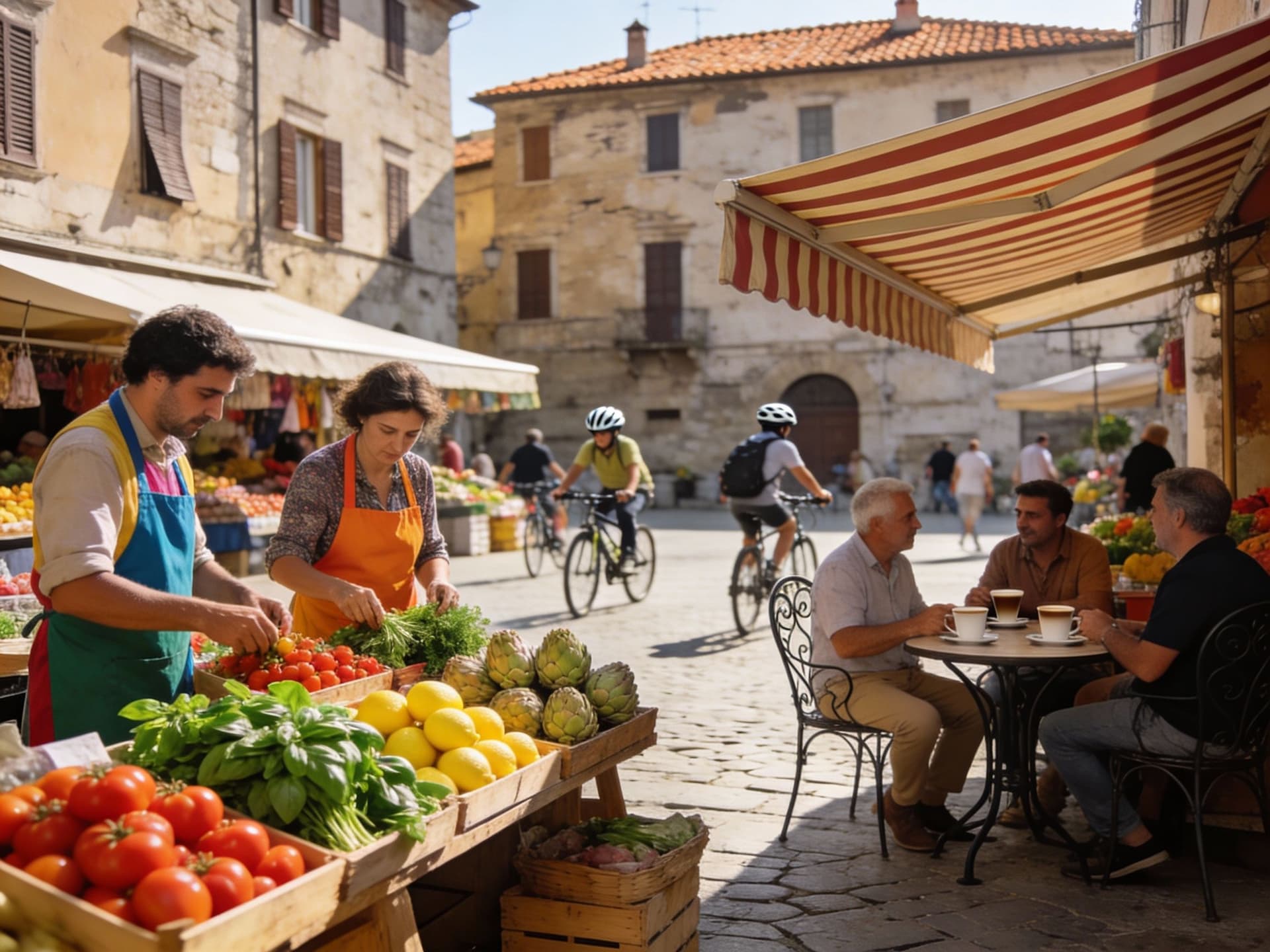
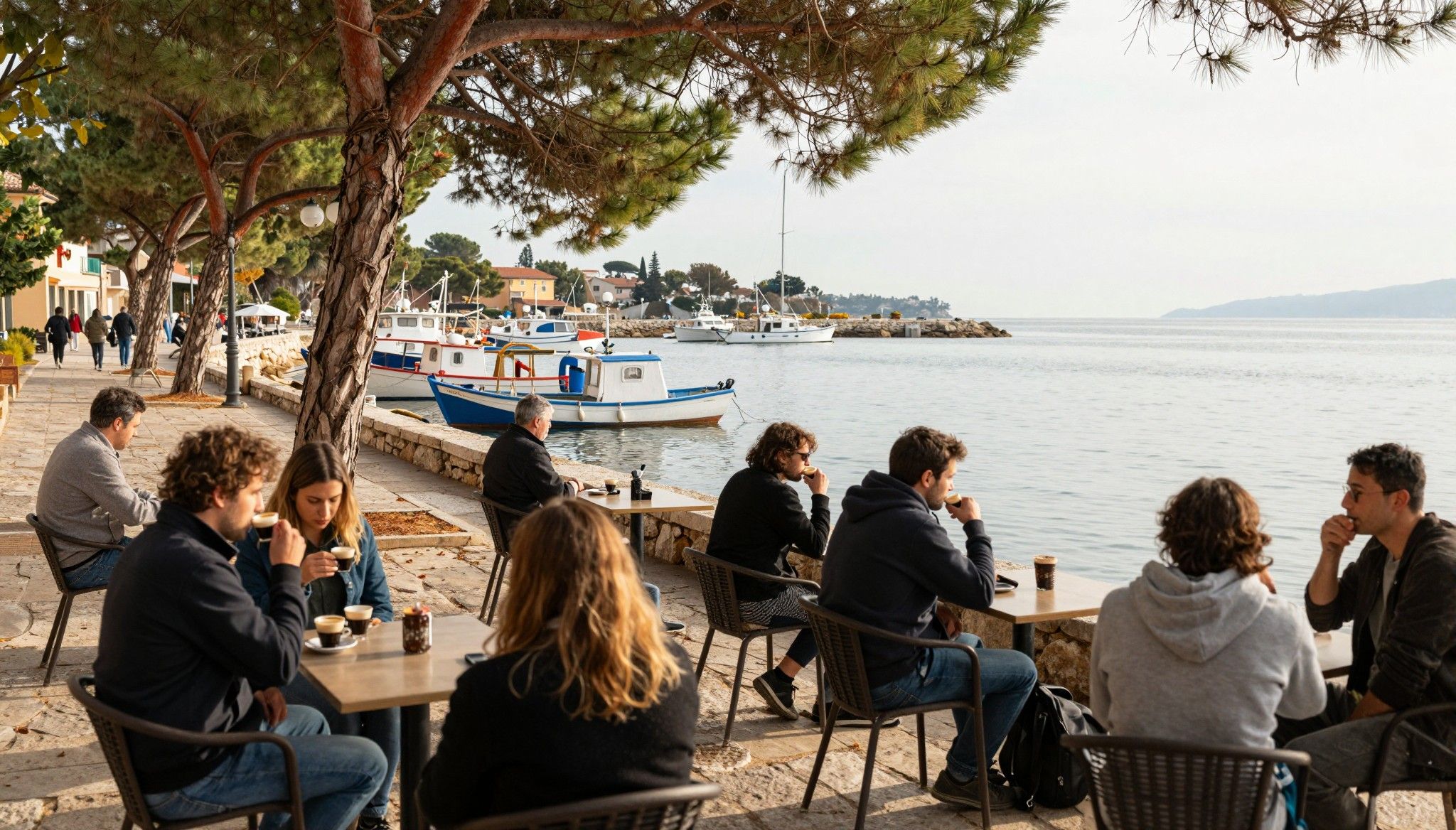
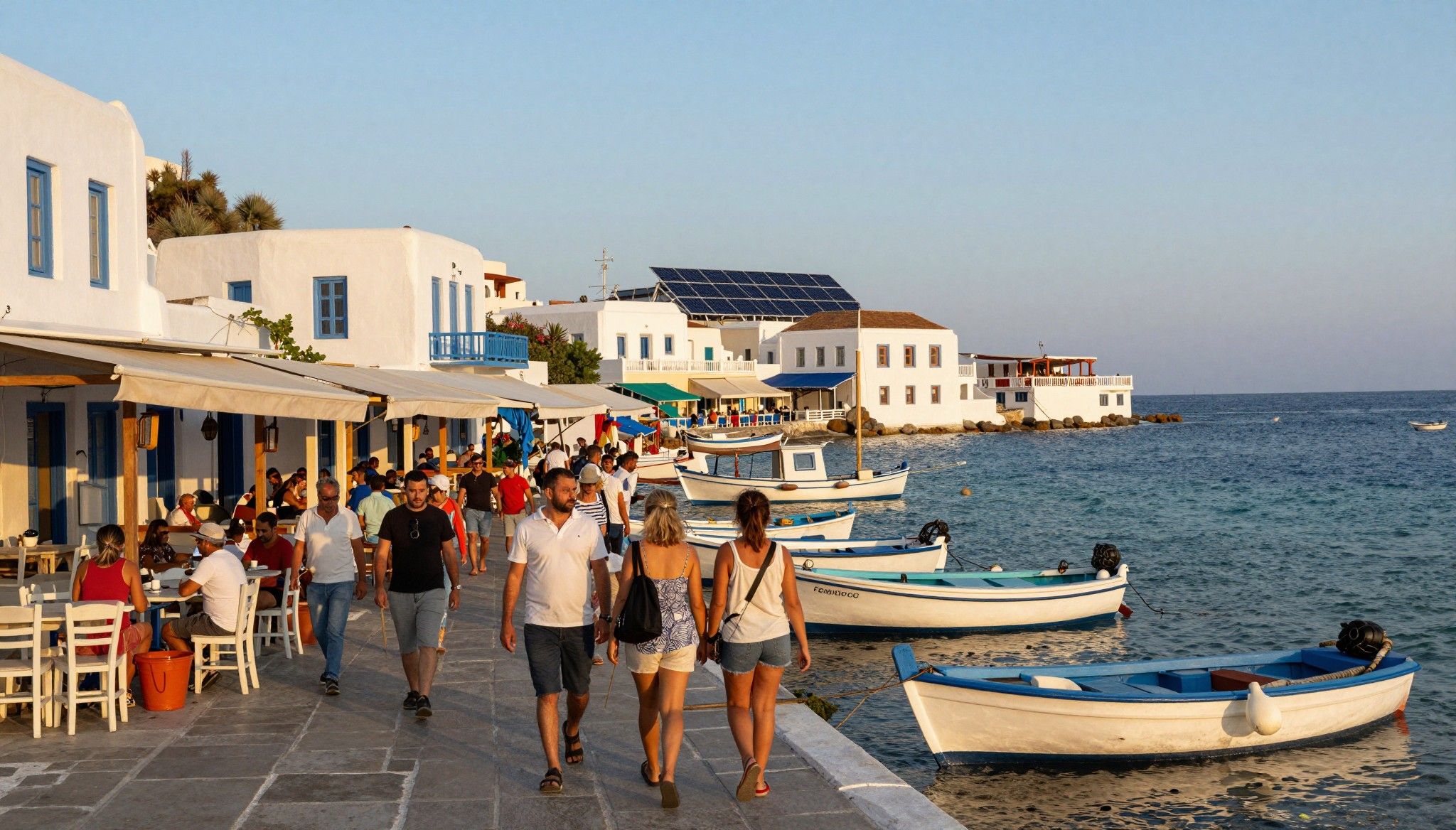
Italian mornings still begin with a coffee and a quick hello in the piazza, but increasingly that espresso is brewed in cafés powered in part by nearby solar and hydro projects. The rise of community solar, rooftop PV on terracotta roofs and a stronger grid means off-grid fantasy has a realistic cousin: homes that use renewables to lower bills and increase comfort, especially in sun-rich Puglia, Tuscany and coastal Sicily. These shifts are visible in everyday life — chargers at seaside cafés, electric bicycles on village lanes, and local energy co‑ops posting weekly generation numbers. Practical benefits follow: more predictable energy costs, quieter generators, and easier integration of modern comforts without sacrificing place character.
Where this green life looks most like the picture (neighborhoods & regions)
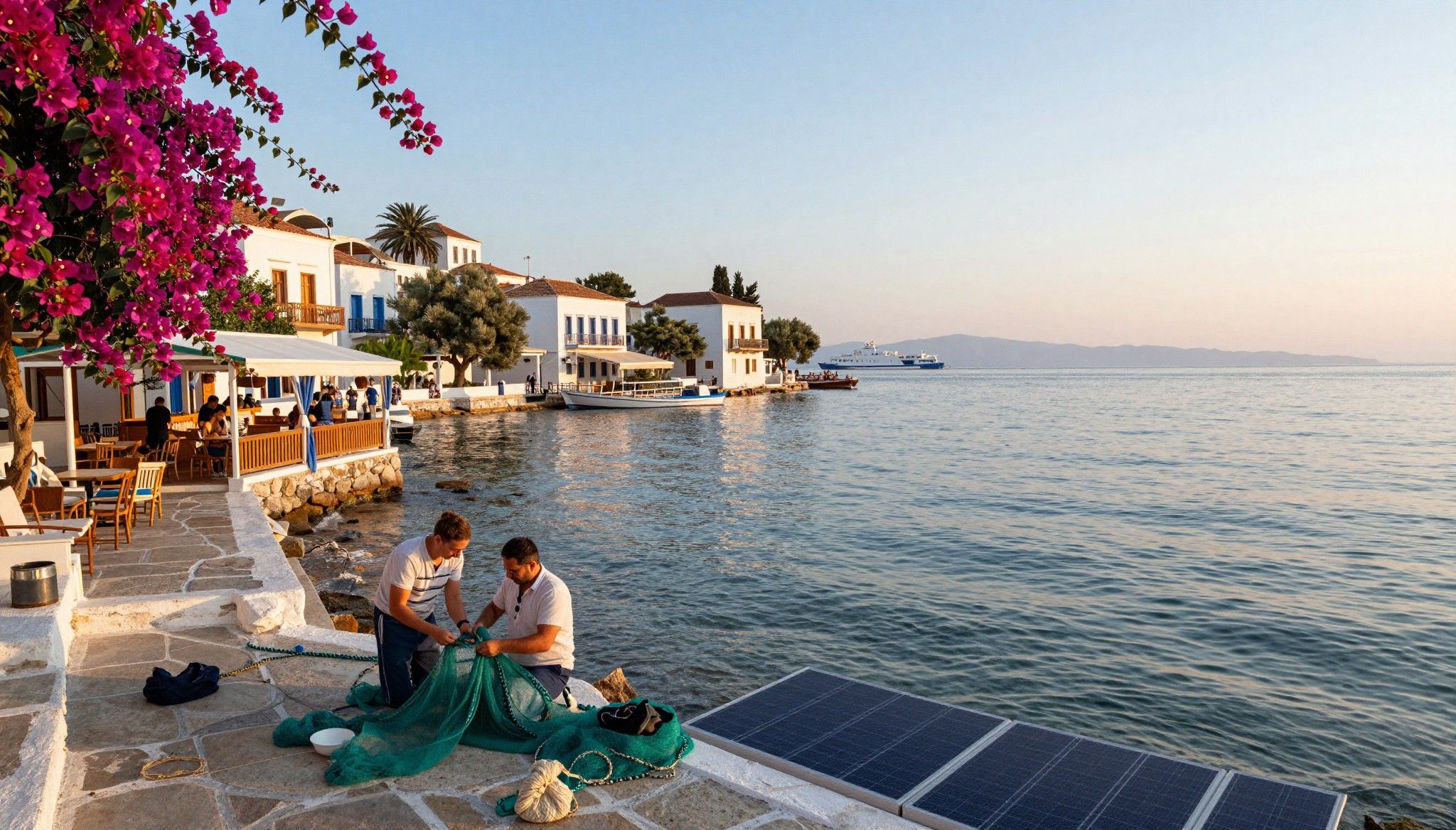
In Liguria you feel it in seaside towns like Camogli and Levanto where small solar projects pair with restored stone houses. In Tuscany’s Val d’Orcia and parts of Maremma, olive groves now share hillsides with discreet PV and small-scale storage. Puglia — Lecce’s honeyed streets and the Valle d’Itria — is a natural fit for rooftop systems and agrivoltaics; Sardinia’s quieter west coast blends wind and solar, while Trentino shows how alpine hydro and storage smooth seasonal supply. Each place offers a different pace: coastal towns hum with tourism and seasonal life, hilltop villages slow into ritual, and alpine valleys answer to winter snow and summer festivals.
Food, daily rhythms and green infrastructure in practice
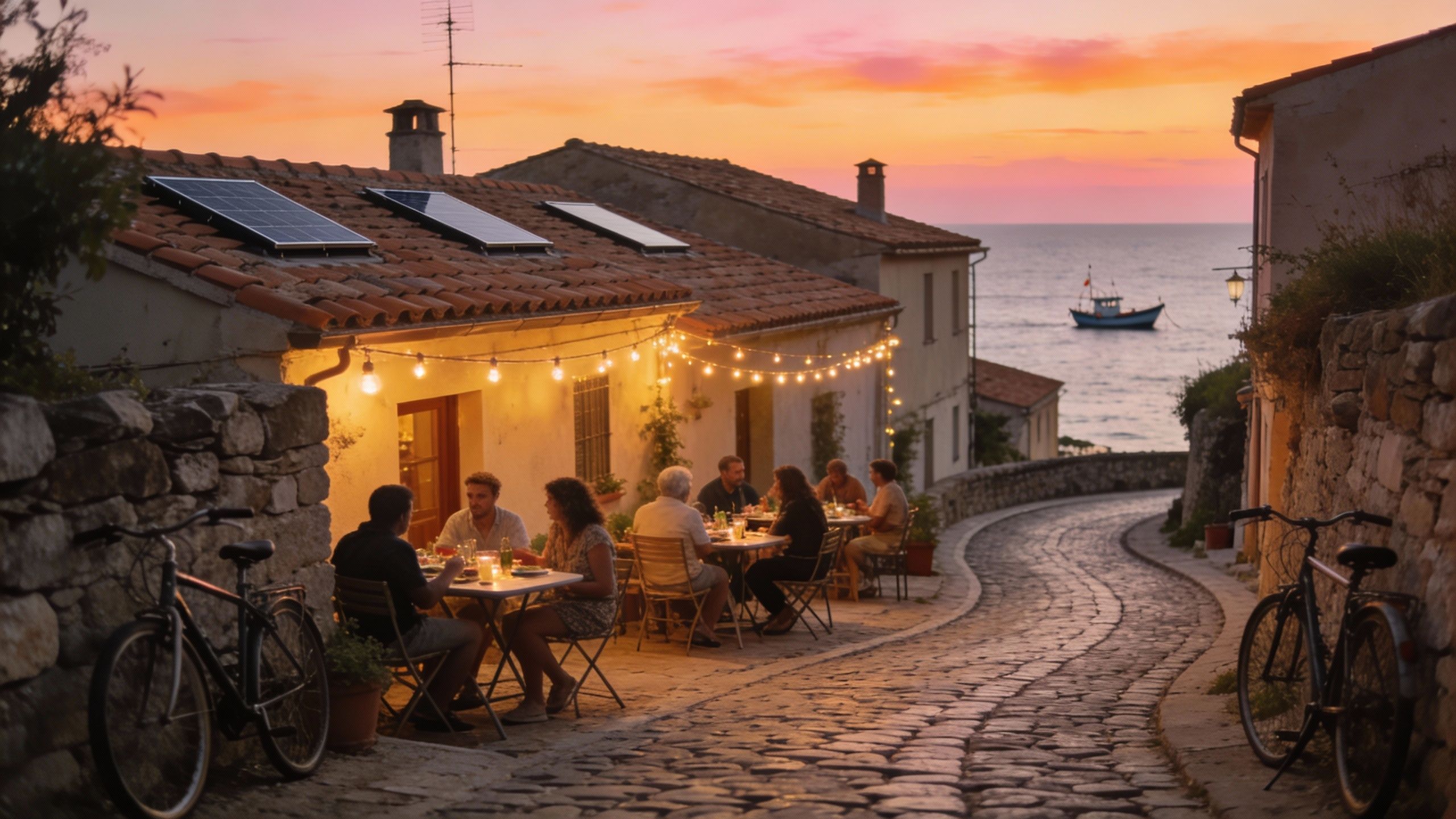
Imagine buying morning fish at the market in Porto San Giorgio, cooking on a stove fed by a heat pump that draws on renewable electricity, and sharing dinner outside beneath grape-arbors lit by LEDs charged earlier in the day. Festivals keep tradition alive — sagra seasons bring neighbourhoods together — while local microgrids and community investments make those gatherings easier to host year after year. The result is a lifestyle that feels rooted and modern at once.
- Lifestyle highlights to look for when house‑hunting in Italy
- Morning market rituals: Mercato Centrale (Florence) or Mercato di Testaccio (Rome) — places where food culture meets community
- Small-scale renewables: rooftop PV, heat pumps and rainwater harvesting visible on traditional properties
- Green social hubs: cafés with EV chargers, co‑working rooms in converted farmhouses, cooperatively managed olive presses
Making the move: practical considerations where lifestyle meets law
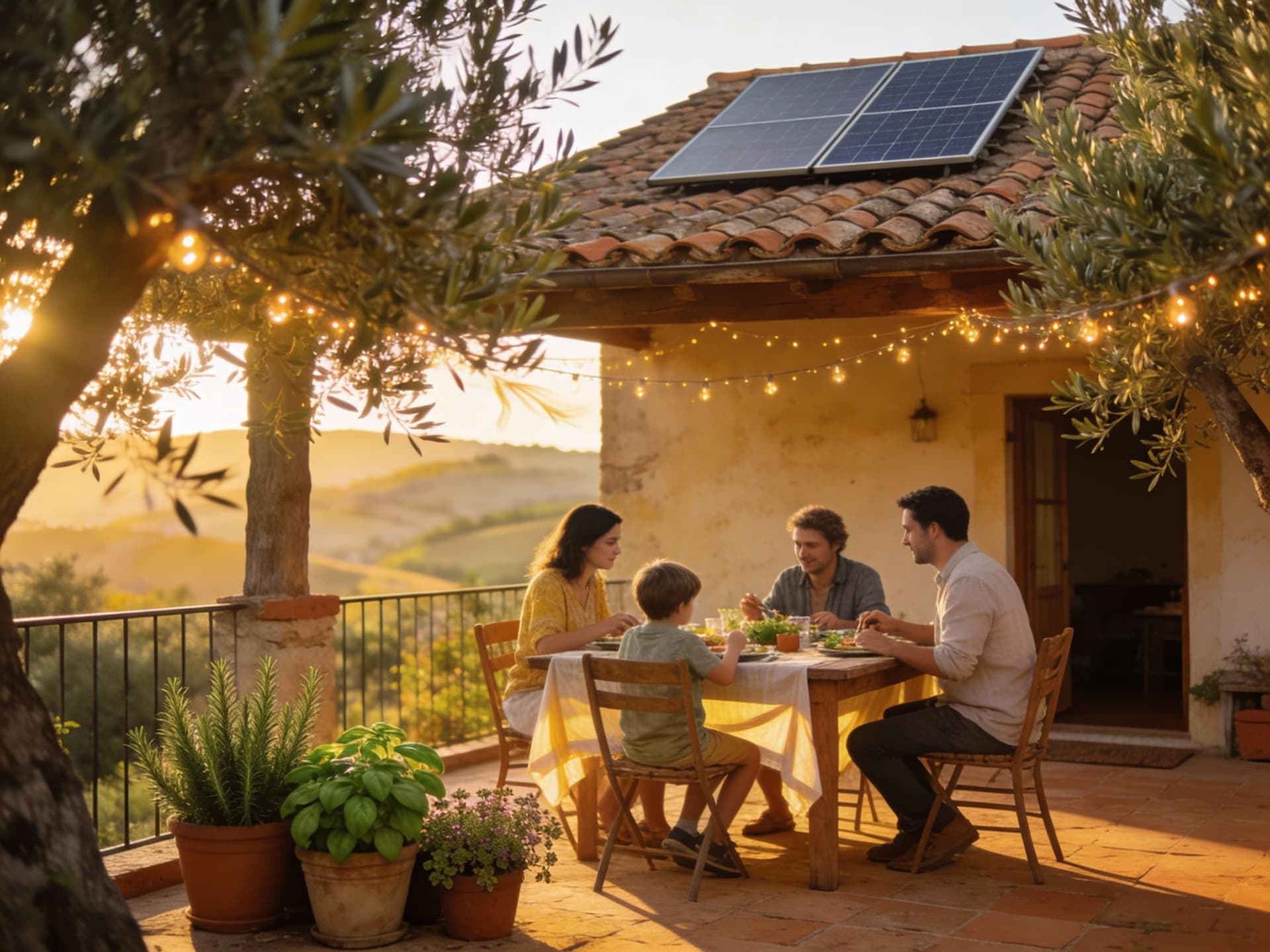
Romance alone won’t close deeds. Italy’s market is famously local: coastal Ligurian terraces command Milan‑level prices while inland Abruzzo offers large plots at modest sums. Recent national averages hover around €2,000–€2,200/m², with big regional spreads. Beyond price per square metre, green infrastructure — from permitted rooftop PV to connection capacity for an EV charger — changes running costs and resale appeal. Ask whether a property has documented PV permits, a recent energy audit (APE), and whether local zoning allows modest extensions or agrivoltaics.
Property types and what they mean for sustainable living
A stone farmhouse with thick walls will feel cool in summer but may need insulation upgrades to avoid high heating bills in winter. A restored palazzo in a centro storico often has limited rooftop access for panels but excellent passive thermal mass. Newer builds in eco‑villages or regenerated industrial sites may already include heat pumps, high‑performance glazing and battery-ready electric systems. Match the property typology to the lifestyle you want: energy independence, low maintenance, or classic charm with targeted retrofitting.
Working with local experts who know both place and green tech
Engage an agent familiar with local building codes and the language of energy upgrades. Architects (architetti) and geometra offer fast clarity on what can be done to historic walls and terraces; energy certifiers (APE inspectors) provide baseline consumption figures; and local installers can translate regional incentives into realistic timelines. A trusted team makes the difference between a nostalgic purchase that becomes a maintenance burden and one that becomes a gentle stewarded home.
- Practical steps that blend lifestyle and logistics
- Request the energy certificate (APE) and recent utility bills; compare to similar nearby homes
- Check permitted rooftop area, connection capacity and local grid upgrade plans with the municipality
- Ask about recent retrofits (insulation, heat pumps, battery storage) and saved annual running costs
Insider knowledge: what expats wish they’d known
Expats tell a common story: moving here feels cinematic at first, then practical details arrive — seasonal energy use, water management for gardens, and the cadence of local maintenance. Italy added significant renewable capacity recently, which means grid resilience and cleaner electricity are improving, but regional differences matter. Mountain valleys still rely on hydropower cadence, and windy stretches see more turbines; southern and central regions lead on solar. Understanding those patterns early saves months of retrofitting headaches.
Cultural notes: small rituals that shape community life
Learn the rhythm: shop at the market on market day, greet neighbours, and attend local sagre — these social steps open doors to tradespeople and unofficial advice on water, wiring and winter work. Language matters less for daily warmth than for practical coordination: a few phrases and a local contact will make permits and installers far smoother. Italians respect good stewardship of land; demonstrating care for gardens, olive trees or shared spaces builds trust quickly.
Longer-term lifestyle and stewardship: what to expect
Think in seasons and stewardship rather than quick flips. Regions with strong green infrastructure investments are attracting steady buyer interest and community resilience projects — factors that protect long-term value. If you plan to rent, energy‑efficient homes now command better seasonal rental income and lower vacancy risk. Buying here is as much about joining a place’s future as enjoying its present.
- Red flags and quick checks before you bid
- No documented APE or recent utility bills — treat as a negotiation point
- Roof access blocked by historic restrictions without clear permit routes
- Promises of future grid upgrades with no municipal documentation
Conclusion: if Italy feels like an invitation, let it be both a home and a stewardship choice. Start with a neighbourhood that feeds your daily rituals — a café you can imagine as your second living room, a market you’ll visit weekly — and layer in practical checks: certified energy performance, permitted rooftop space, and a local team who knows permits and installers. The payoff is simpler than you think: more comfort, lower running costs, and a deeper sense of belonging in a place that values both craft and the future.
British expat who traded Manchester for Mallorca in 2017. Specializes in guiding UK buyers to luxury Spanish estates with clear navigation of visas and tax.