How Greece’s Renewables Recast Where You Should Buy
Greece’s rapid renewable rollout is changing where eco‑minded buyers choose to live—visit off‑peak, vet grid capacity, and prioritise stewardship over showy sea views.
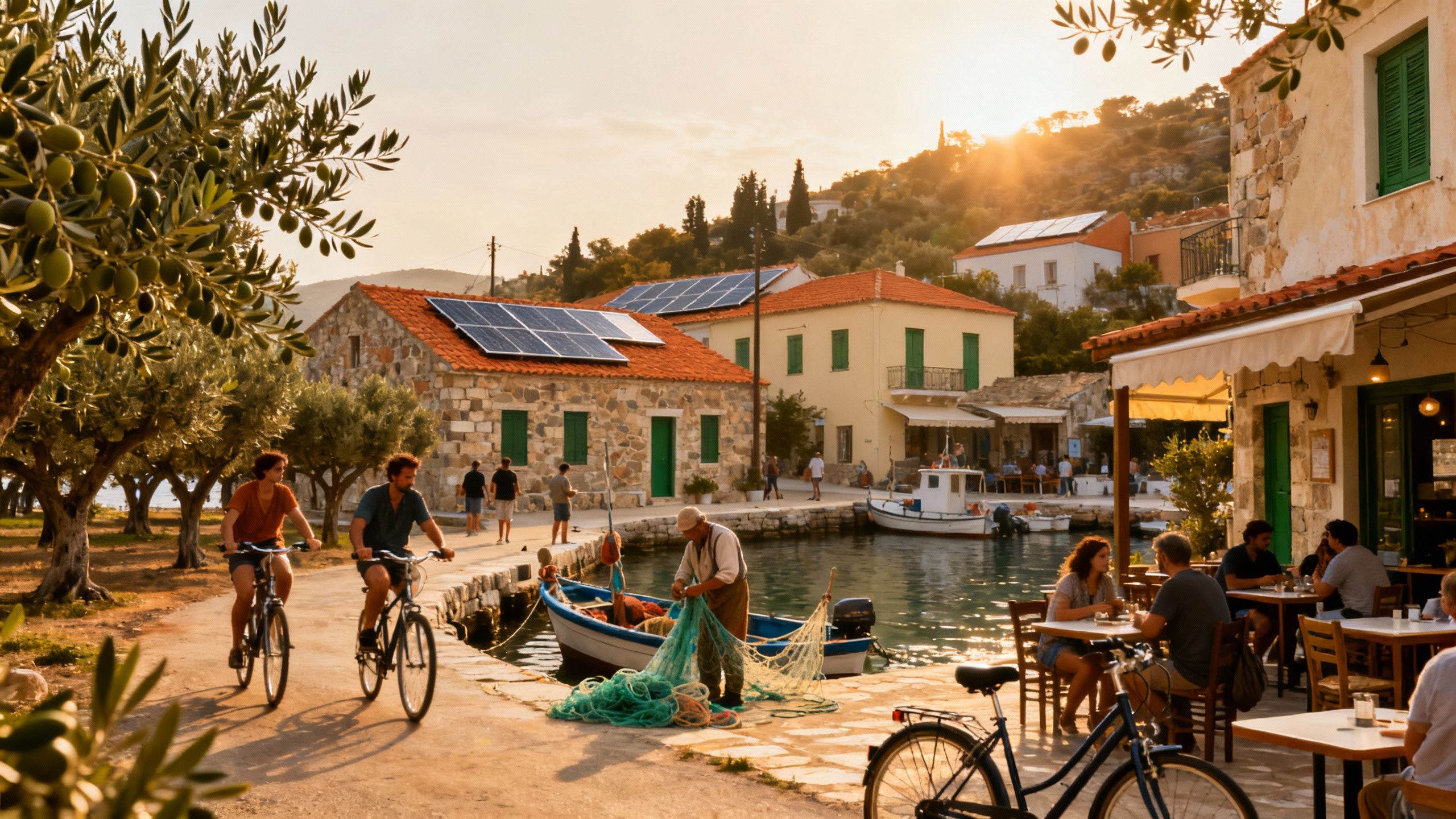
Imagine waking to coffee steam and a breeze scented with rosemary, then cycling past solar‑glazed olive groves to a sunlit taverna. In Greece, that sensory life now sits alongside a quiet energy revolution: rooftop PV, island energy communities and record solar installs reshaping where and how people want to live. For eco‑minded buyers, those green grids and quieter, renewable‑rich pockets change the calculus of both daily life and property value.
Living the Greek life: sunlit rhythms and neighbourhood texture
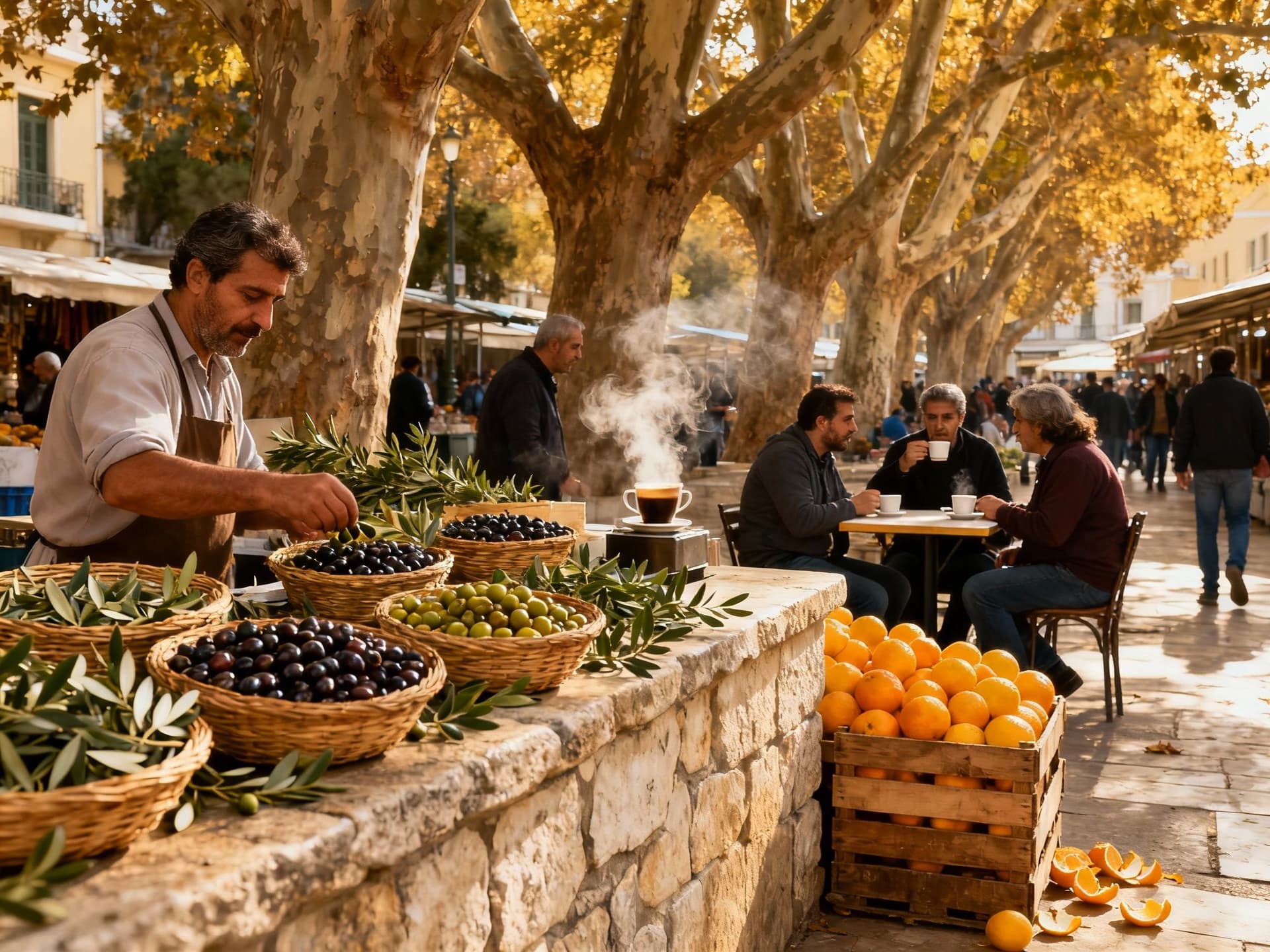
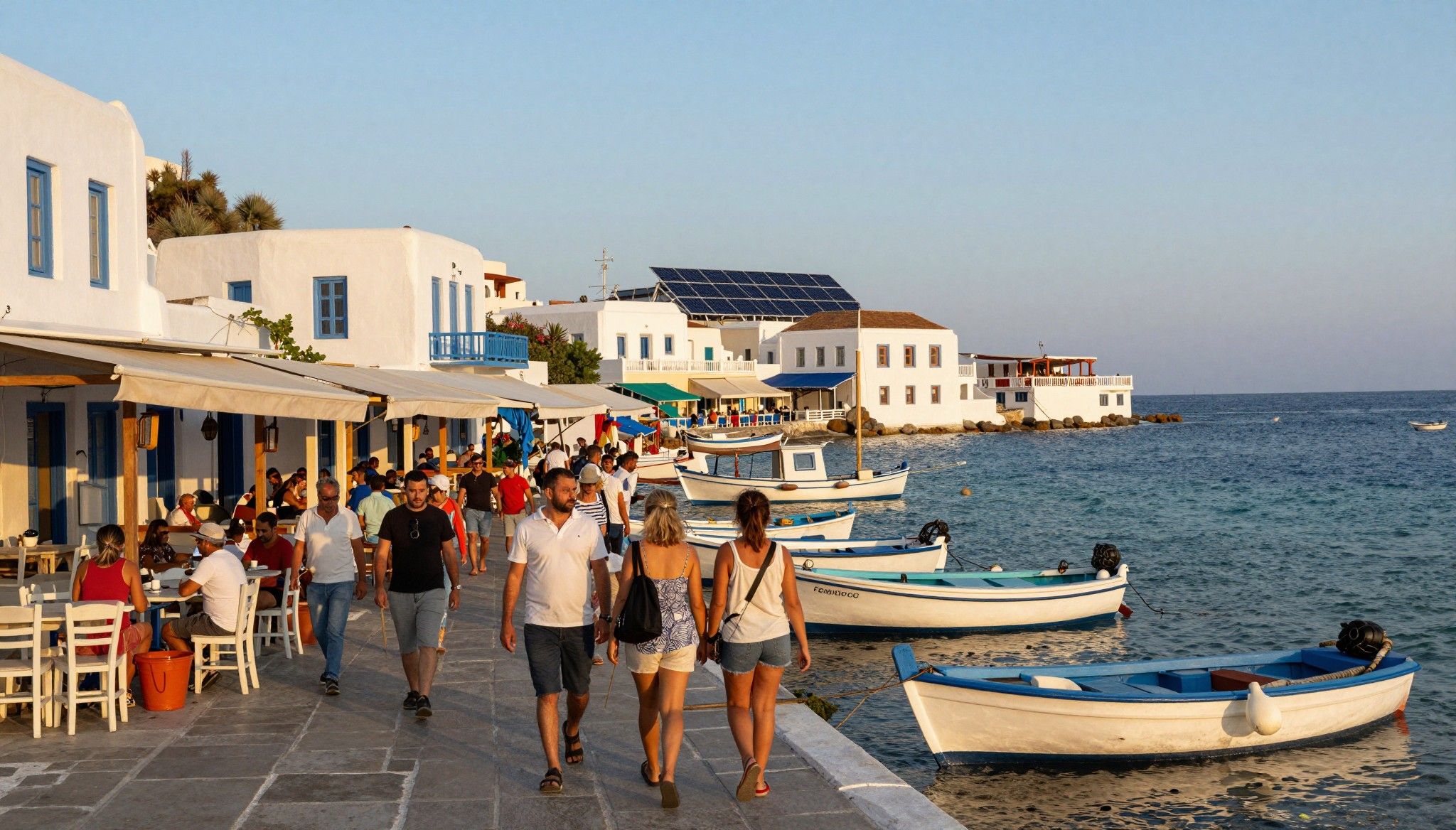
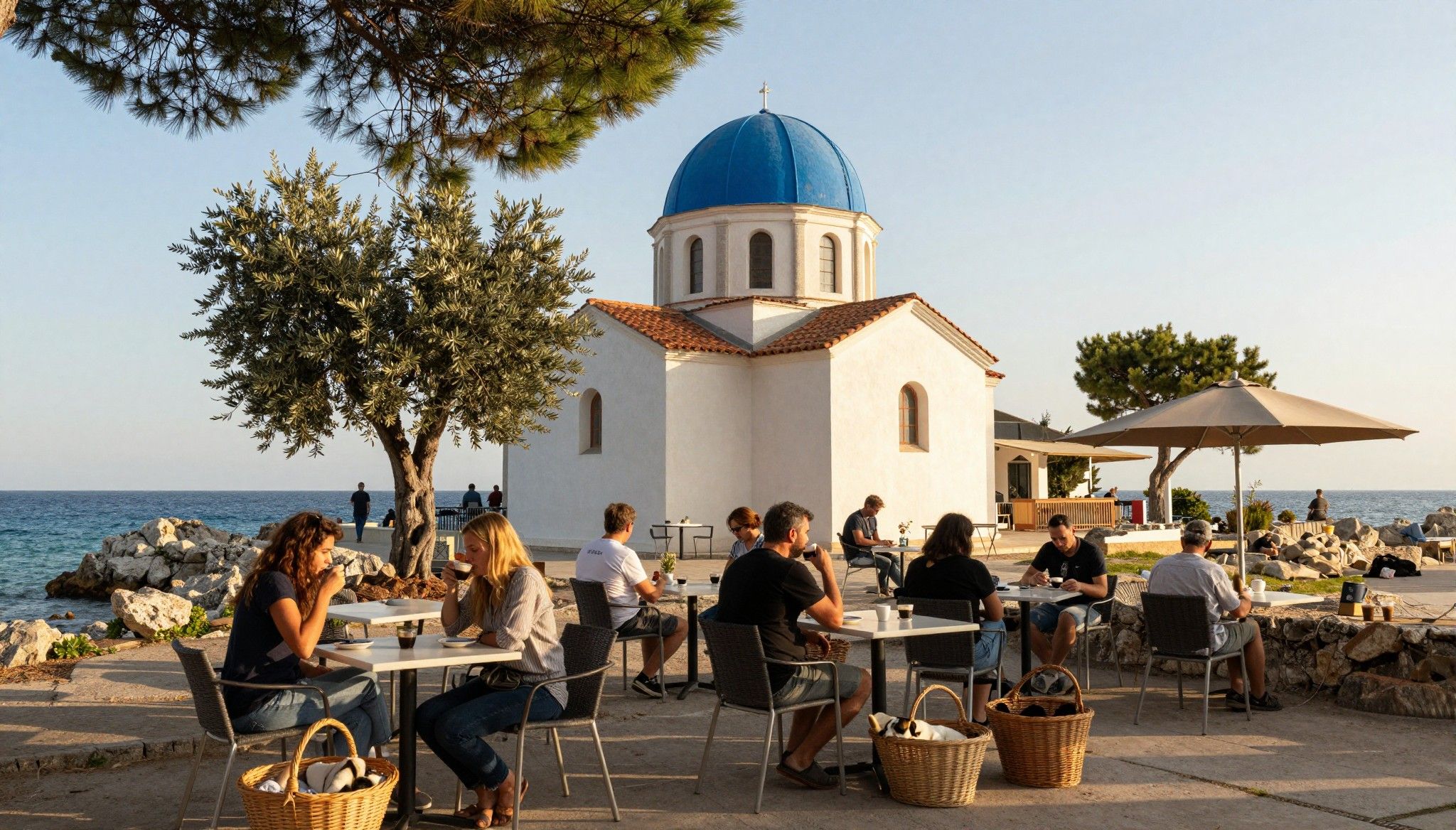
Greece is equal parts convivial street life and landscape‑first calm. In Athens you’ll find early espresso crowds on Koukaki’s tree‑lined streets and creative evenings in Kerameikos; on the islands, Paros’ port-side kafeneia and Chora lanes hum with barefoot ease. Seasons here are not just weather—they are a calendar of markets, festivals and harvests that shape when neighbours gather, how homes are used and what features matter in a property.
Athenian pockets and coastal contrasts
Northern Athens (Kifisia, Psychiko) offers leafy streets, family gardens and larger plots where solar arrays and rainwater collection are easy to add. The Athens Riviera (Voula, Varkiza) blends beach access with newer low‑rise developments that prioritise terraces and passive cooling. Contrast that with Cycladic islands—Paros, Naxos, Tinos—where whitewashed lanes and small plots reward careful retrofits and community energy projects rather than sprawling installations.
Food, markets and the season that shapes life
Picture Saturday at Varvakios market in Athens, or a fishermen’s morning at Naoussa harbour on Paros; these rituals are where neighbours buy, swap recipes and choose producers they trust. For buyers, proximity to a morning market or a community garden can mean fresh food daily and an easy way into local life. Seasonal rhythms also influence property use — small island houses often sit empty outside high summer, while mainland towns pulse year‑round.
- Lifestyle highlights to look for when dreaming of Greece - Morning espresso at Kafenio Karras (Kifisia) or a seafood lunch at Naoussa harbour (Paros) - Weekly farmers’ markets and olive oil cooperatives - Walkable neighbourhood squares where life unfolds - Short ferry links or regional airports for year‑round access - Rooftop terraces with afternoon shade and strong summer breeze - Community solar parks or island energy cooperatives
Making the move: how Greece’s green infrastructure changes the practical picture
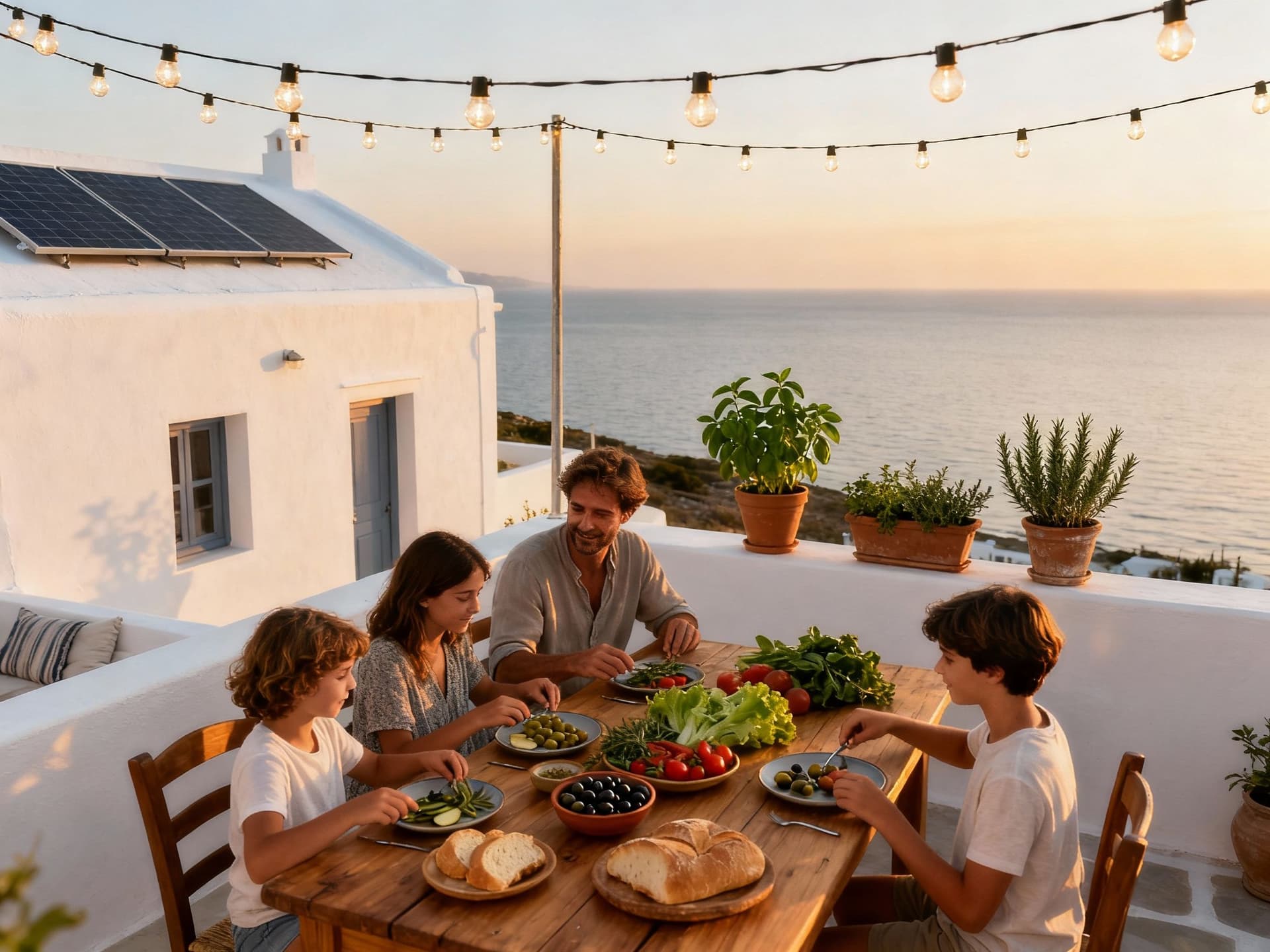
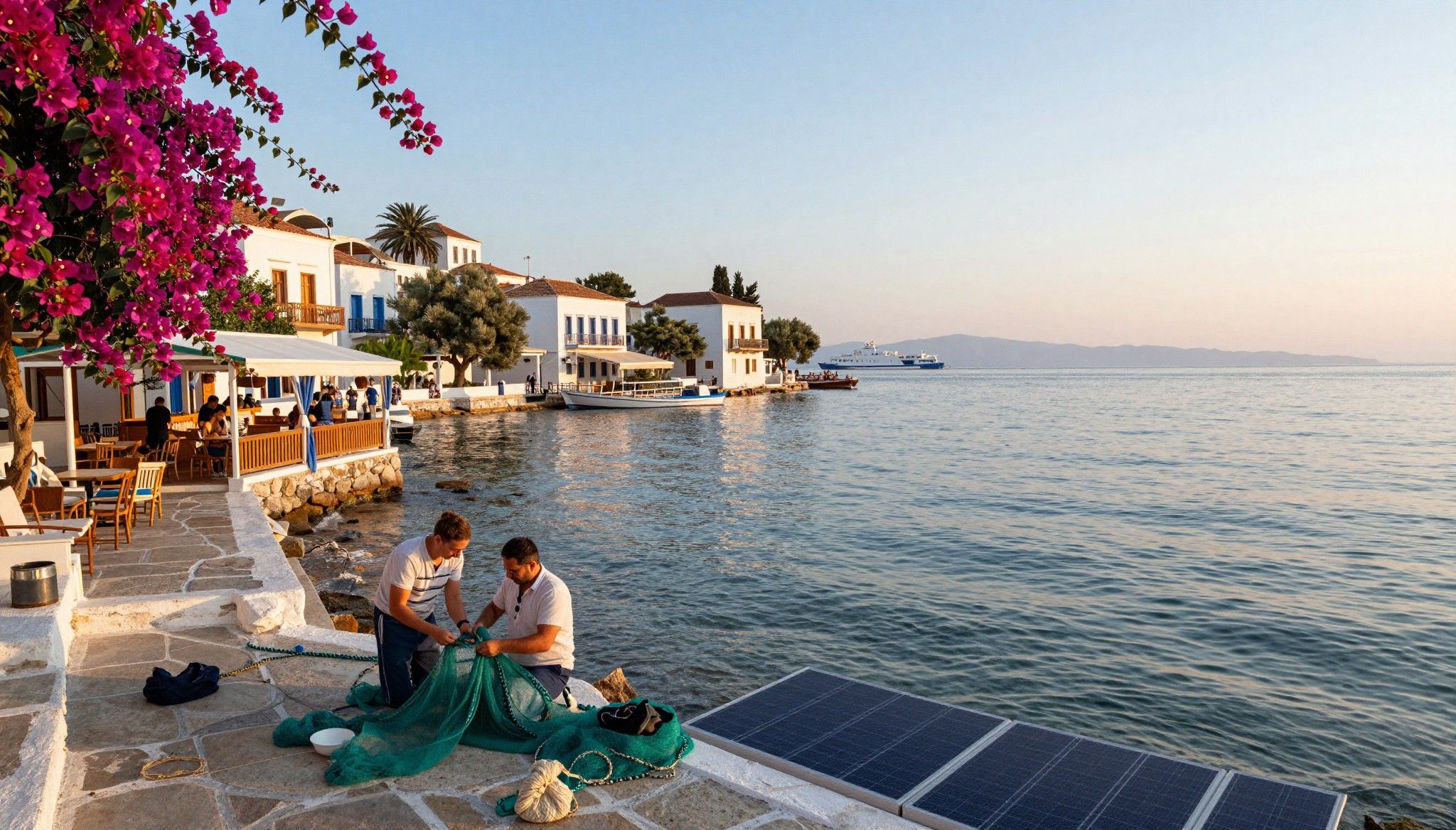
Greece’s rapid uptake of solar and wind has real consequences for buyers: lower running costs, improving grid reliability in many areas, and new local regulations around connections and energy communities. Between 2023 and 2024 Greece added gigawatts of PV capacity, and islands in particular are trialling microgrids and community ownership models. That means a seafront cottage with a modest PV system and battery can feel more independent than it did a few years ago.
Property styles: what to choose if you love low‑impact living
Traditional stone houses with thick walls are naturally cool in summer and pair beautifully with solar hot water and discreet PV on flat roofs. Newer low‑rise builds increasingly include heat pumps, thermal insulation and greywater systems. If you prioritise year‑round comfort, favour properties in towns with reliable grid connections and access to local installers for EV charging and battery systems.
Work with local experts who know green reality
- Practical steps to match lifestyle with local capability 1. Ask agencies about recent PV, battery and heat‑pump installations they’ve handled—experience matters when permits are involved. 2. Confirm grid connection capacity with the local DEDDIE/HEDNO office or your agent; islands sometimes have curtailment or limited export capacity. 3. Budget for modest retrofits: insulation, smart thermostats and a 3–5 kW PV system dramatically lower bills. 4. Visit outside high season to test year‑round life—markets, ferries, medical access and quietness often differ sharply. 5. Seek agencies tied to local energy communities or installers; they’ll speed approvals and help with incentive schemes.
Insider knowledge: what expats wish they'd known before buying
Real buyers tell us the surprises are practical, not romantic: noise from generators on diesel‑dependent islands, long permit waits for PV exports, and the occasional mismatch between an online listing and the lived reality of a neighbourhood. Greece’s energy transition is fast—renewables now supply a large share of electricity and national targets have become more ambitious—but local grid quirks and permit timing still shape which homes deliver true low‑impact living.
Cultural integration and daily life
Speaking some Greek opens doors—literally and socially—but many communities welcome newcomers who participate in local life. Expect slower bureaucracy, lively neighbourly chat over a street table, and a strong gift economy of food and practical help during harvests or festivals. That social fabric makes gardens, shared olive presses and local energy co‑ops not just useful, but a way to become part of the place.
Long‑term lifestyle and stewardship
Think beyond purchase: plan for seasonal maintenance, seed local relationships, and prioritise materials and systems that age well in Mediterranean climates. Stone, lime plaster and native planting reduce water needs and repair costs; solar systems sized for self‑consumption reduce your exposure to wholesale price swings. Good local agencies advise on stewardship—who to call for a dry‑stone wall repair or a battery warranty claim—and that continuity often matters more than headline price.
- Red flags and smart checks before you bid - Listings that hide generator dependency or curtailment history - Properties without recent electrical rewiring (important for PV/battery fit) - Scarce potable water or vague well rights in rural plots - Agents unfamiliar with local municipal renewal incentives or community energy programs - Overly optimistic rental income projections for off‑season months
Greece offers a life that feels stitched to sea, soil and sun—and its green infrastructure is increasingly the thread that holds modern comforts to that ancient fabric. If you want a home that breathes with the seasons, seek neighbourhoods where community energy, good installers and local markets are present. Start by visiting in shoulder season, ask agents about recent PV and battery projects, and lean on local stewardship to keep the dream healthy for years to come.
Next steps: make a short checklist before viewing properties and ask your agent to confirm grid capacity, recent local installs and typical year‑round occupancy. Agencies that understand green infrastructure will help you match the life you want with homes that support it—less flashy, often more honest, and wonderfully rooted in place.
Danish relocation specialist who moved from Copenhagen to the Algarve; supports families with seamless transitions, local partnerships, and mindful purchases.