Italy Isn’t as Pricey as You Think — Where Green Value Hides
Italy’s green infrastructure is shifting value away from tourist hotspots—discover microclimates, retrofit potential, and where sustainable living meets affordable prices.
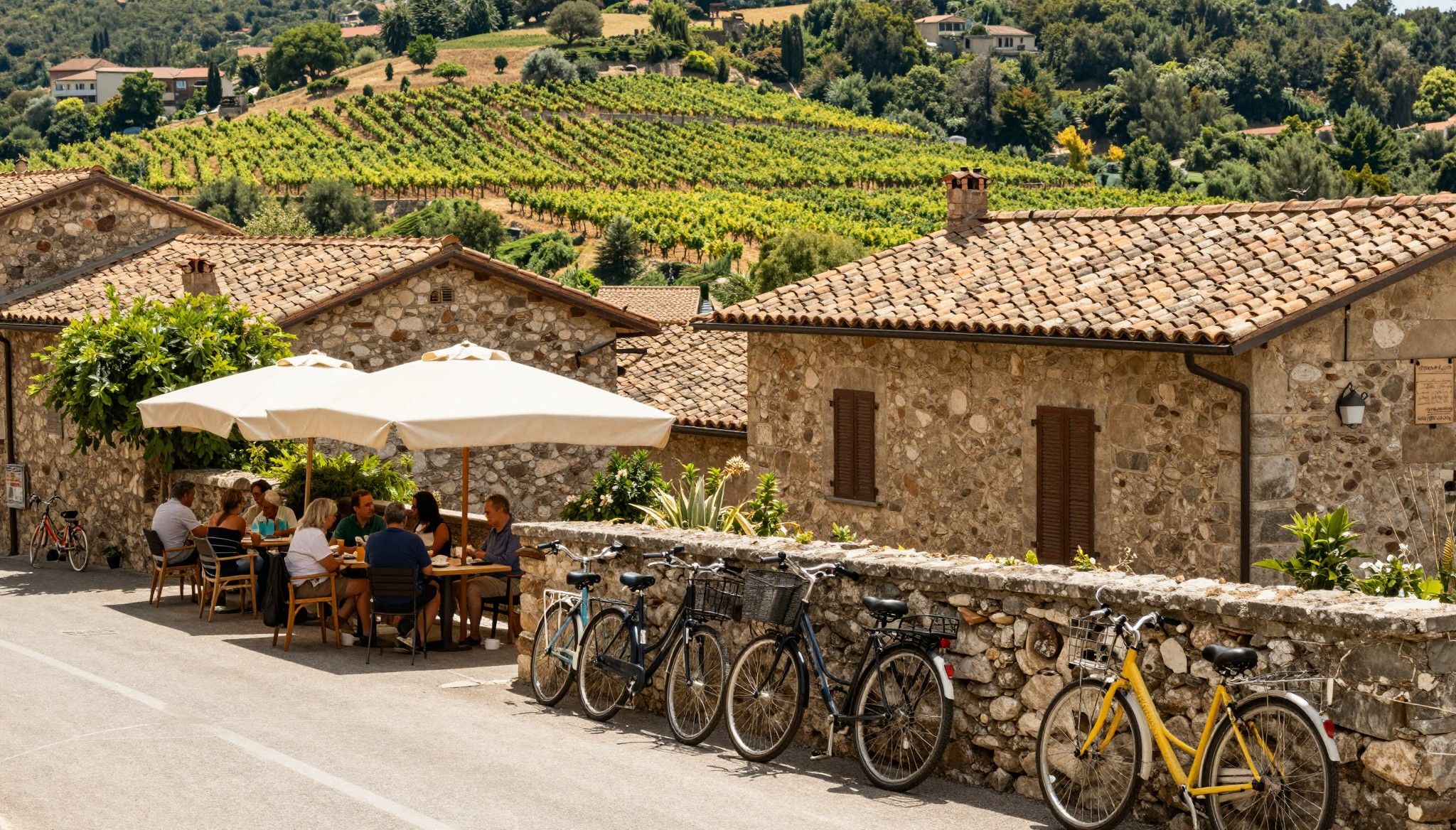
Imagine stepping out at dawn into a neighborhood where stone houses are threaded with jasmine, a baker still slides loaves into a wood oven, and a solar array glints on a renovated barn roof. In Italy the day often begins simply — coffee, conversation, a slow walk to the market — but beneath the romance there is a quietly accelerating green transformation: regions adding solar farms, towns funding energy retrofits, and buyers choosing homes for ecosystems not just views. That convergence — lifestyle and green infrastructure — is where international buyers find unexpected value. Recent market data confirms rising volumes and pockets of price stability even as demand grows; the nuance matters when you’re planning a move.
Living the Italian lifestyle: more than a postcard
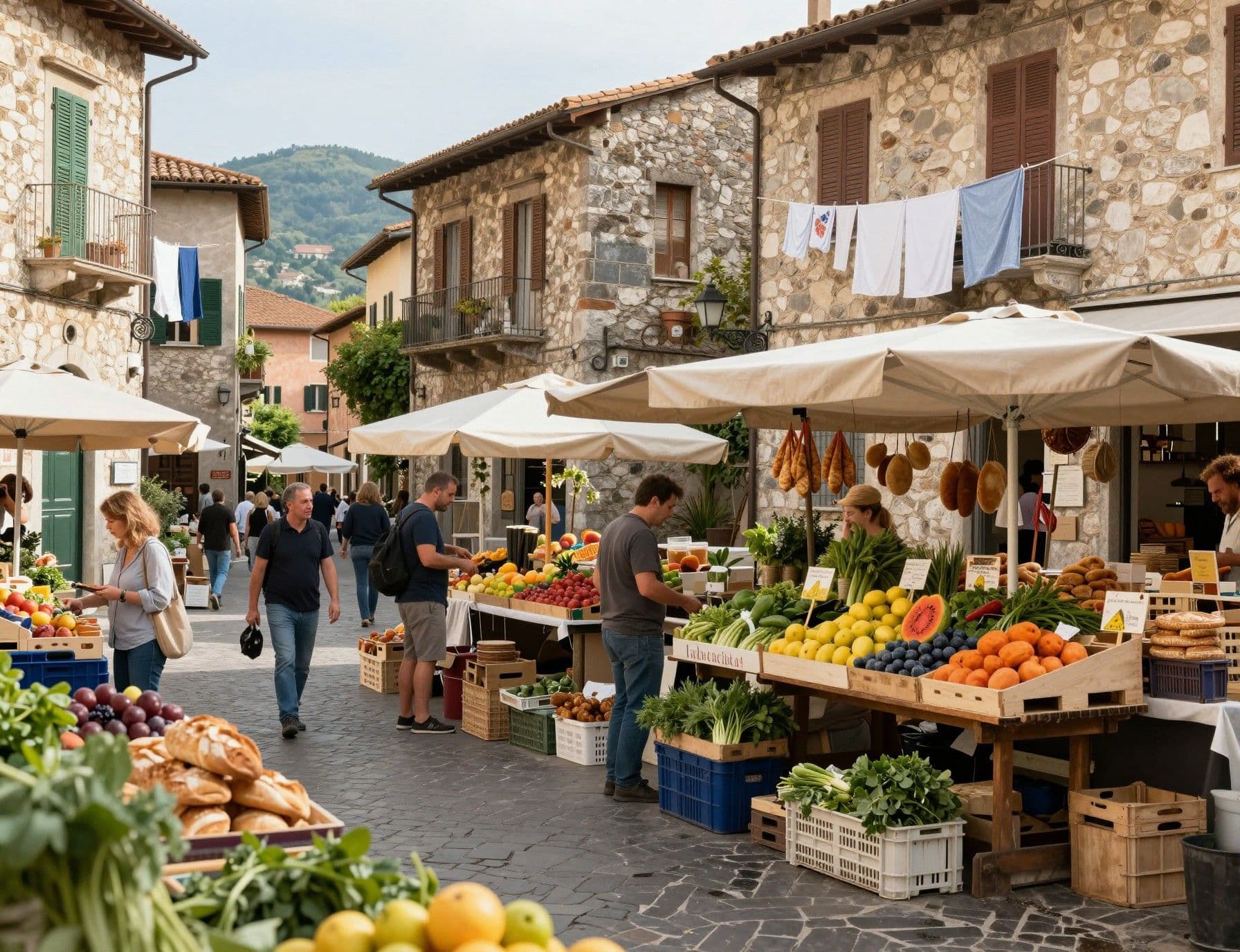
To live in Italy is to measure time by markets and seasons: morning markets in Palermo’s Ballarò, aperitivo in Milan’s Navigli at dusk, and weekends that unfurl in olive groves or on granite cliffs of the Cinque Terre. The atmosphere varies wildly — from the slow, pastoral pulse of Umbria to the more kinetic, design‑minded streets of Turin — and each rhythm shapes how you live in a home and what features matter most (insulation in the north, shade and passive cooling in the south). Market indicators show modest national price growth and increased sales volumes in 2024–2025, reminding buyers that lifestyle choices align closely with local market realities.
Neighborhood spotlight: Florence’s Oltrarno vs. Pisan countryside
Oltrarno in Florence is a sensorial classroom: tiny artisan workshops, coffee at Le Vespe del Duomo, and evenings threaded with the chatter of neighbors. Contrast that with a farmhouse near San Miniato: gravel roads, stone terraces, a garden of figs and rosemary, and the wide, quiet sky. The Oltrarno lifestyle rewards proximity to cafes, galleries and craft networks; the countryside rewards land, privacy and the possibility of adding PV and battery systems. Both speak to different green priorities: compact, walkable living versus regenerative, land‑integrated stewardship.
Food, market life and the seasonal arc
Food anchors daily life. Picture buying wild asparagus from a vendor in Sanremo in April, then pairing it with a bottle of Ligurian vermentino on a balcony overlooking the sea. Seasonal rhythms affect how properties are used: coastal homes bustle in summer and quiet in winter, while hilltown houses trade tourist income for year‑round tranquillity. For international buyers interested in rental income, aligning your property’s seasonality with local festivals — truffle fairs in Alba, harvest weekends in Montalcino — can transform a romantic purchase into a sustainable lifestyle business.
Making the move: where green infrastructure meets property decisions
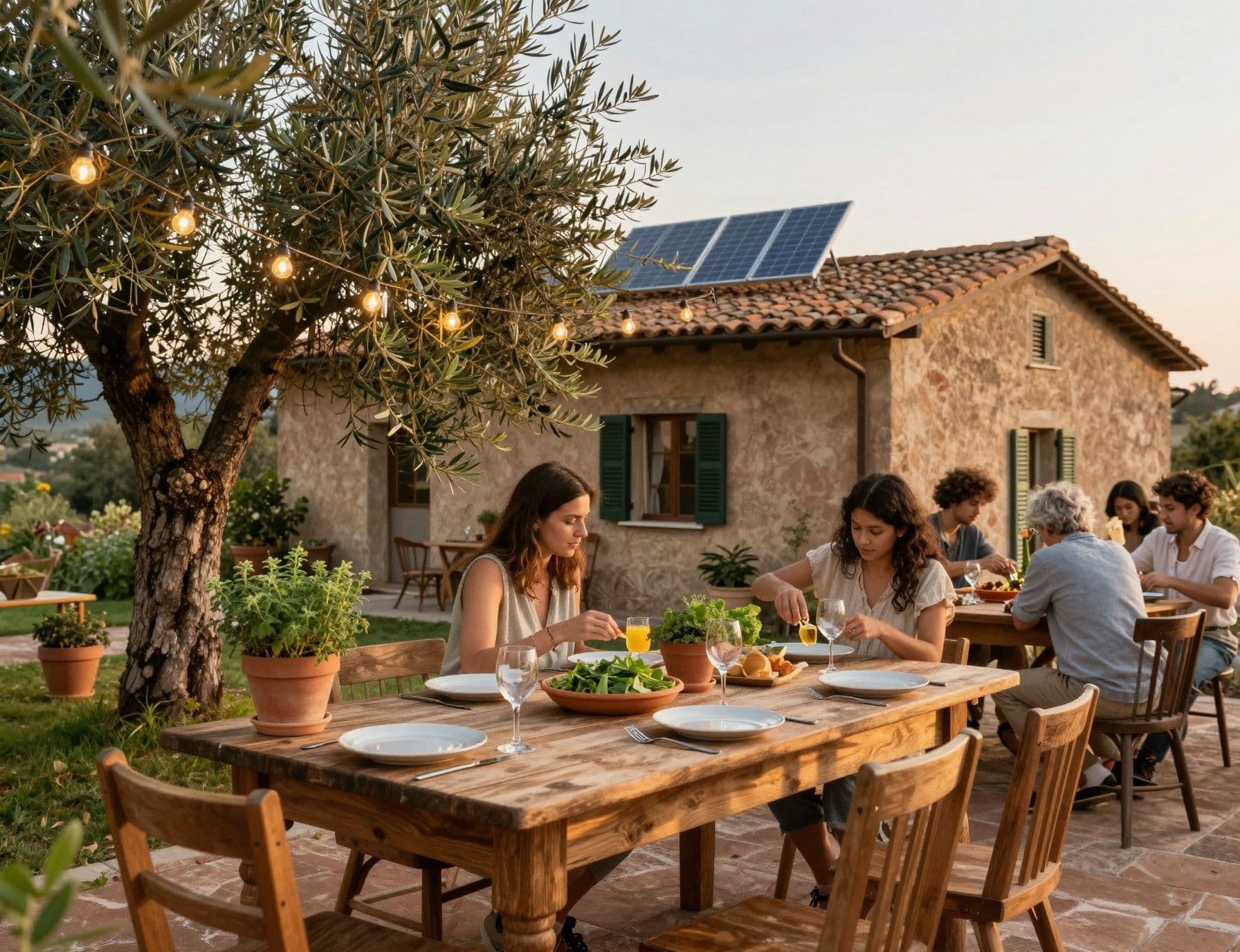
The practical side of falling in love with Italy is asking: where will my home be warm in winter, cool in summer, affordable to run, and supported by local renewables? Regions such as Puglia, Sicily and parts of Tuscany have seen strong renewable investment — large‑scale solar approvals and growing distributed PV — which change local energy economics and long‑term livability. Buyers who prize energy independence can look for properties already retrofitted with efficient heating, PV and good thermal envelopes, or choose areas where grid‑scale renewables make future retrofit financing and community energy projects straightforward.
Property types and what they actually offer for life (and bills)
A stone farmhouse with thick walls offers cool summers and a forgiving thermal mass, but often needs retrofits for modern comforts; an apartment in a 19th‑century palazzo delights with light and location but can have high common‑area heating costs. Italy’s renovation incentives — the famed Superbonus and Ecobonus programs — have historically lowered the price of deep retrofits, though eligibility and percentages changed in recent years. For buyers, that means a property’s current green features matter less than its retrofit potential and your ability to work with local contractors who understand incentive rules.
Working with local experts who know both life and law
Local agents, architects and notaries are not interchangeable: choose professionals who speak your language and the language of green finance. A good local agent helps you locate neighborhoods that match daily rhythms — market‑centered or land‑oriented — and points out microclimate differences that affect passive heating and cooling. An architect familiar with historic fabric will tell you whether solar on a tiled roof is feasible and legal; a notary will flag title quirks or conservation restrictions that change renovation options. In short, hire people who understand lifestyle and regulation together.
Questions to ask an agent about green infrastructure and lifestyle
Which nearby renewables (solar farms, wind, hydro) serve this area and how do they affect grid reliability and prices?
Has this building used Ecobonus/Superbonus funds recently, and are there ongoing condominium works that will change running costs?
Are there local zoning rules or cultural heritage constraints that limit visible solar or insulation upgrades?
Insider knowledge: myths, tradeoffs and expat truths
Here’s the contrarian truth we hear again and again: Italy is not uniformly expensive — and the green premium often lives off the main tourist spine. While central Florence or Lake Como command prices, inland hill towns and selected southern regions offer strong sustainability upside for much lower entry prices. Renewables and retrofit incentives concentrate in regions investing in energy transition, creating pockets where operational costs fall and quality of life rises. For expats, the secret is to think like a local: prioritize microclimate, community services, and long‑term energy prospects over headline price per square metre.
Cultural integration: small rituals that shape everyday life
Language matters less than presence: a pharmacist who knows your name, the barista who remembers your order, and a volunteer rota at the town festa anchor you faster than formal networks. Expect an initial period of observation — Italians value patience, reciprocity and respect for local rhythms — and reward that patience by joining neighborhood markets or local volunteer groups. Those small rituals also reveal the practical: where to source reclaimed stone, which local craftsmen are best at breathable lime plaster, and who installs heat pumps that harmonize with old radiators.
Long‑term lifestyle considerations
Over a decade, life in Italy rearranges priorities: the commuter’s goodwill for rail links, the gardener’s love for irrigation harvest, and the cook’s demand for a robust pantry that stands through seasonal markets. Long‑term buyers think about community energy projects, water management for drought‑prone summers in the south, and schools and healthcare access in rural areas. Market trends show steady activity and areas of growth; pairing that data with lifestyle priorities helps you decide where the green investment truly rewards everyday living.
Steps for smart, green‑minded buying in Italy
1. Visit in different seasons to experience microclimates and local rhythms firsthand.
2. Ask agents about recent energy retrofits and the status of local incentive programs.
3. Meet local craftsmen and an architect before making an offer to understand retrofit feasibility and true costs.
4. Factor seasonality into rental and lifestyle plans; use festivals and market seasons to inform potential income windows.
5. Build a three‑year plan: small retrofits first (insulation, thermostatic valves), then larger works (heat pumps, PV + battery) aligned with available incentives.
Quick data anchors
Istat reported year‑on‑year house price growth in early 2025 while sales volumes increased, signaling active markets. Italy approved gigawatts of solar projects in 2024, shifting regional energy profiles and improving future grid economics. National retrofit incentives have changed over time but remain a powerful lever for buyers who plan staged renovations.
Conclusion: live the life first, then buy the roof that supports it. Italy rewards the patient buyer who prioritises place, community, and long‑term stewardship. If you want a home that feels like part of a landscape — cool in summer, warm in winter, and kind to the planet — start by visiting neighborhoods across seasons, speak with local green‑minded professionals, and plan retrofits as part of your lifestyle. When you do, you’ll find that the true value in Italy hides in microclimates, community energy, and homes that breathe with the land.
British expat who traded Manchester for Mallorca in 2017. Specializes in guiding UK buyers to luxury Spanish estates with clear navigation of visas and tax.