Sun, Terraces & the Green Grid: Greece’s New Reality
Greece — where sun-warmed terraces, local markets and a fast-growing renewables sector make sustainable Mediterranean living practical; verify grid and visa rules early.
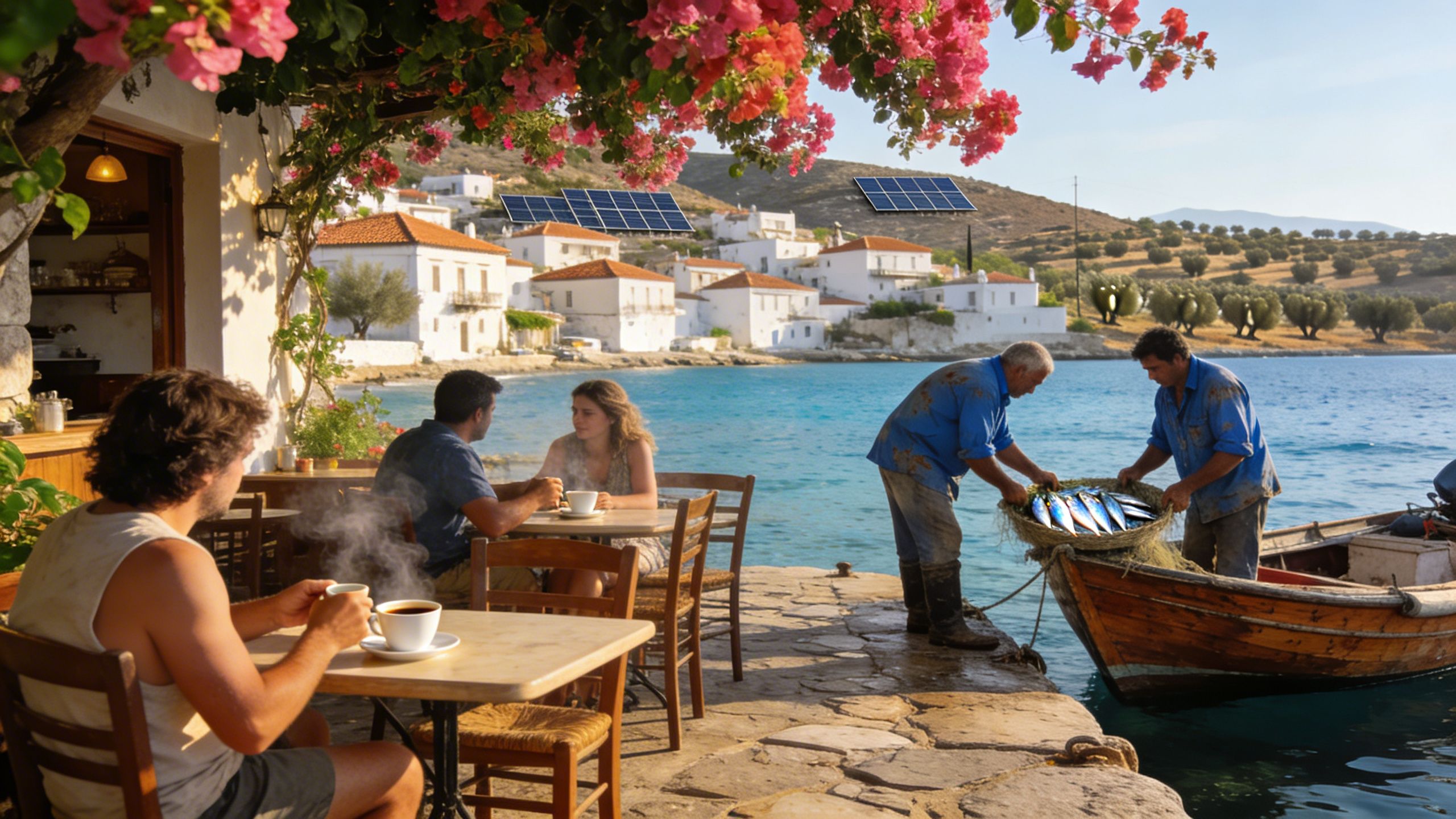
Imagine waking to the smell of espresso and orange blossoms, then stepping out onto a limestone terrace warmed by a mild sun — this is daily life in Greece, where islands and mountains share an easy rhythm and green energy is reshaping neighborhoods. For buyers who prize solar roofs, local food markets and a slower, nature-rooted pace, Greece feels like a long-held secret becoming modern again.
Living the Greener Greece Lifestyle
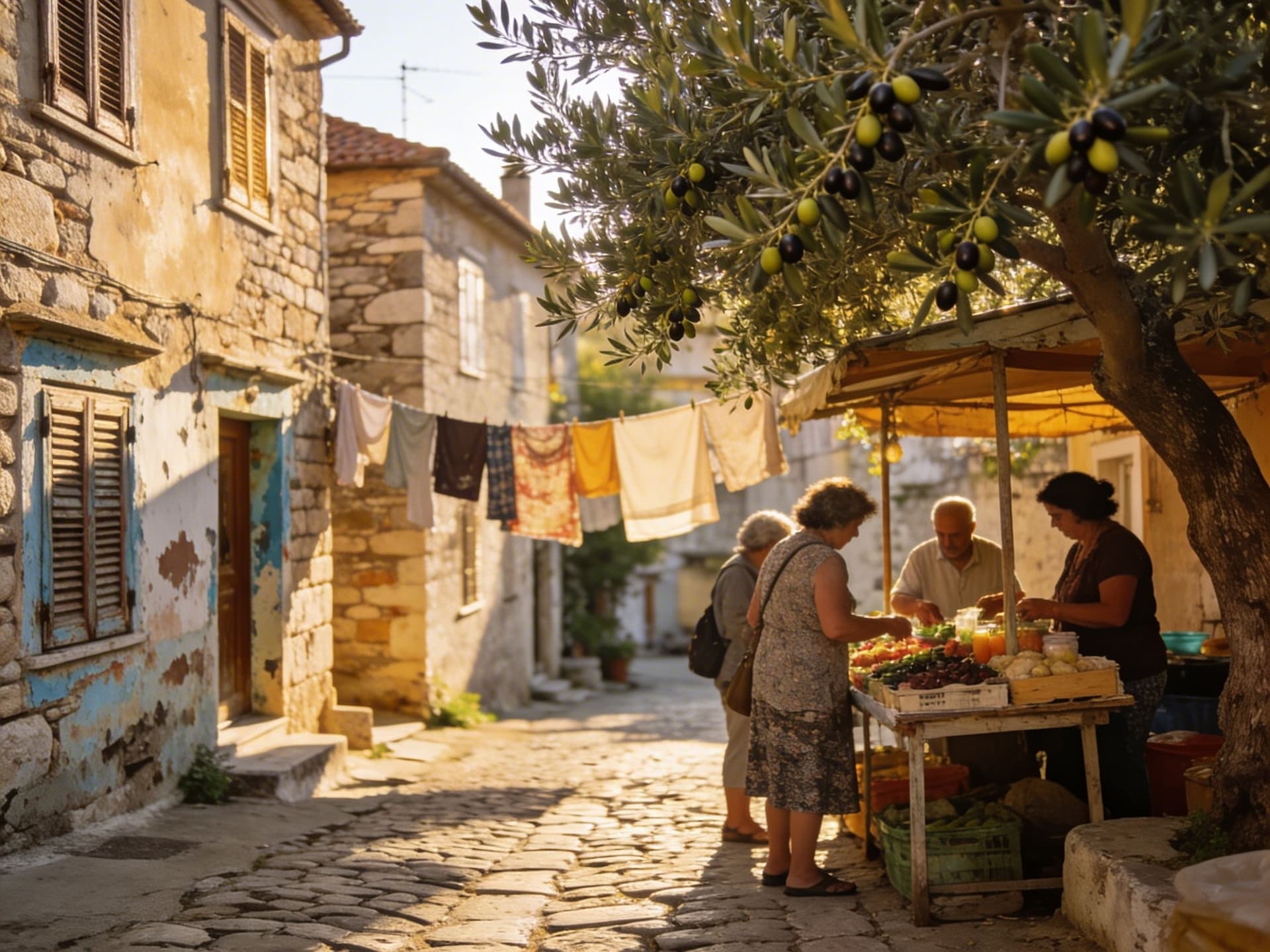
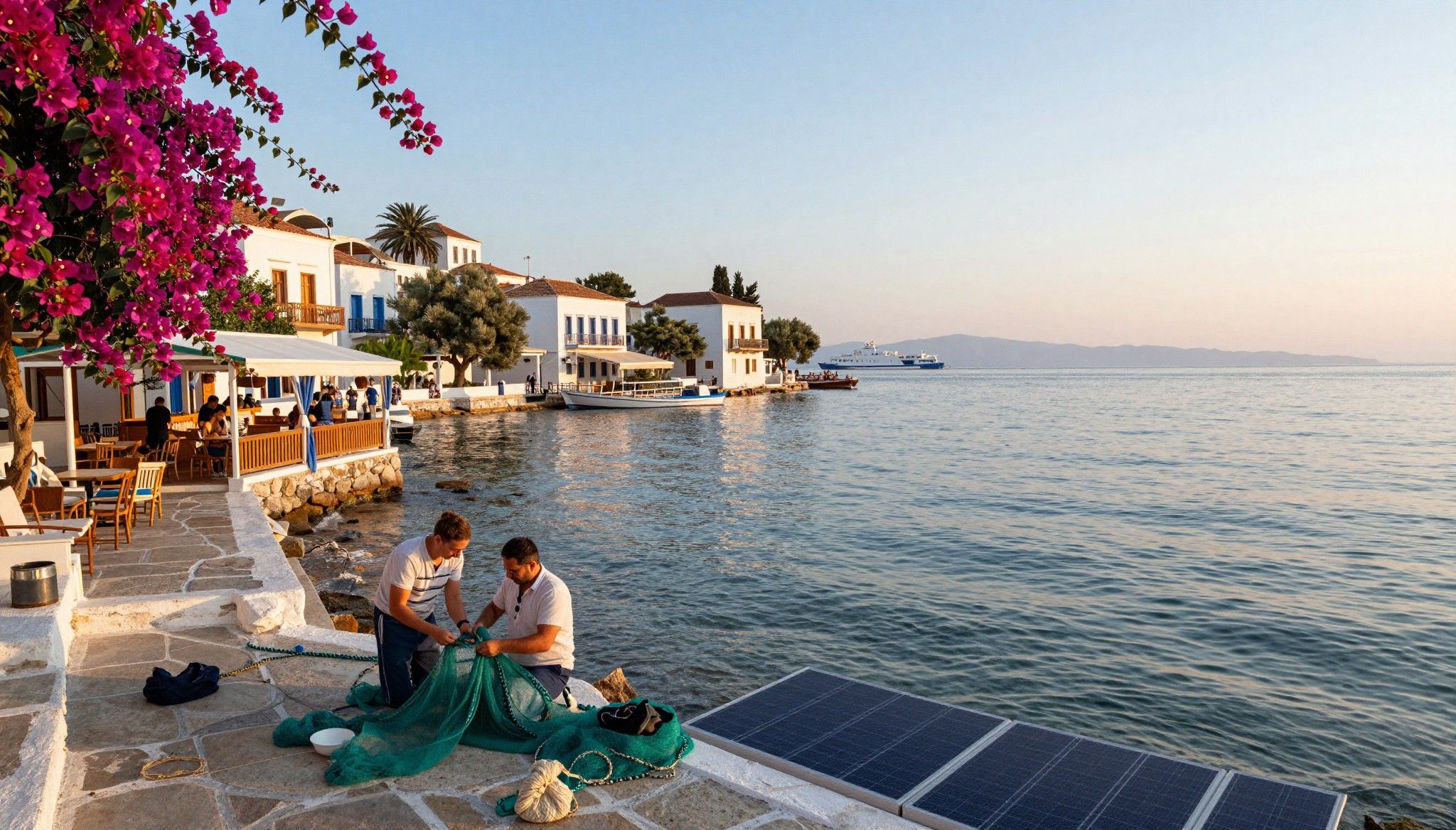
In neighborhoods from Koukaki in Athens to the olive-scented lanes of Naxos, you feel a practical eco-awareness: rooftop panels hum quietly, neighbourhood gardens produce tomatoes for taverna owners and small co-ops sell olive oil pressed within the region. Solar capacity has surged in recent years, so the sight of panels fitting into neo-classical roofs and modern terraces is now part of the scenery rather than an oddity.
Athens: city pockets of green living
Walk from the Acropolis to Koukaki and you pass small community gardens, cafés with re-used furniture and apartment blocks with added balconies for herbs and vines. Streets like Drakou and Rovertou Galli have a mix of restored townhouses and sympathetic retrofits — perfect if you want urban life with a terrace that collects sunlight for hot water and battery storage.
Islands & countryside: off-grid charm
Head to Lefkada or the Peloponnese and you encounter properties built of stone, thick walls and pergolas that make living outside a season-long delight. Increasingly, small communities are pairing local renewables with water-saving gardens — these choices shape not only lifestyle but running costs and independence from high summer electricity demand.
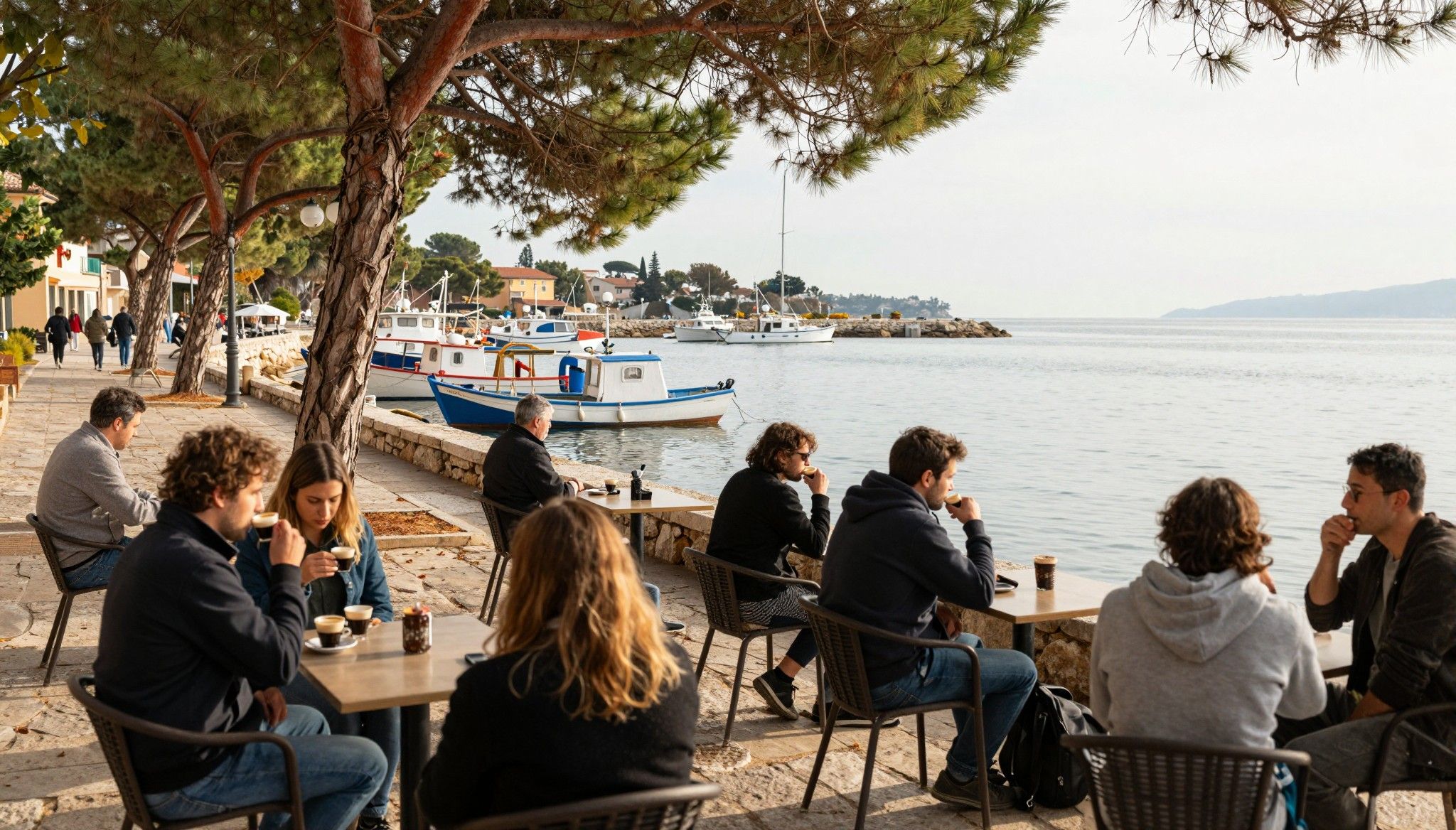
- Morning rituals: espresso at Café Avli (Koukaki), market run to Varvakios (Athens), sunlit terrace breakfasts on Naxos
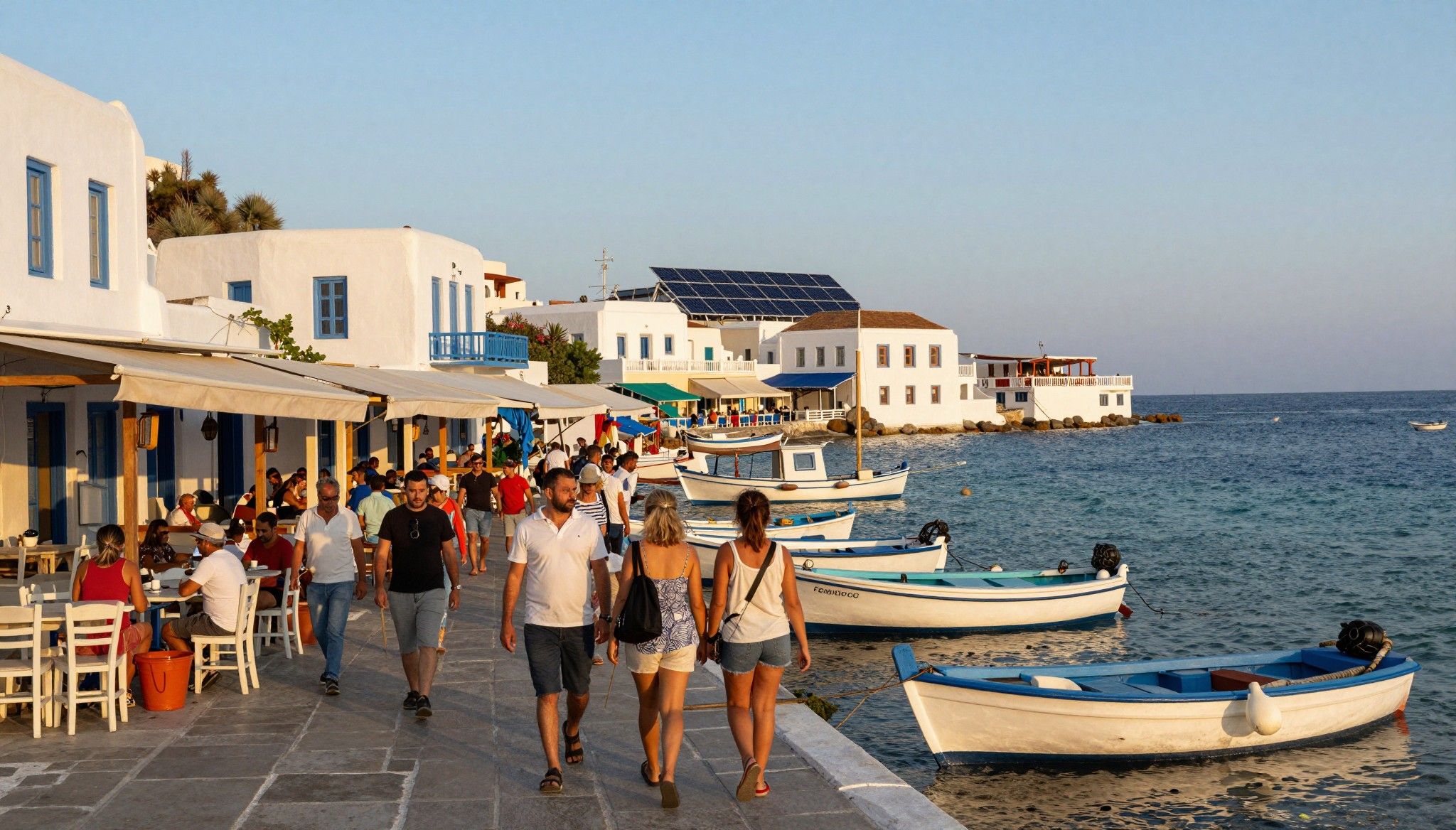
- Evening life: taverna suppers under bougainvillea, neighbours sharing homegrown produce, village festivals (panigyria) that knit community
- Outdoor pleasures: morning swims at Elia beach (Mykonos) or quiet coves on Ikaria, hiking in Zagori’s stone villages, olive grove walks at dusk
Making the Move: Practical Considerations
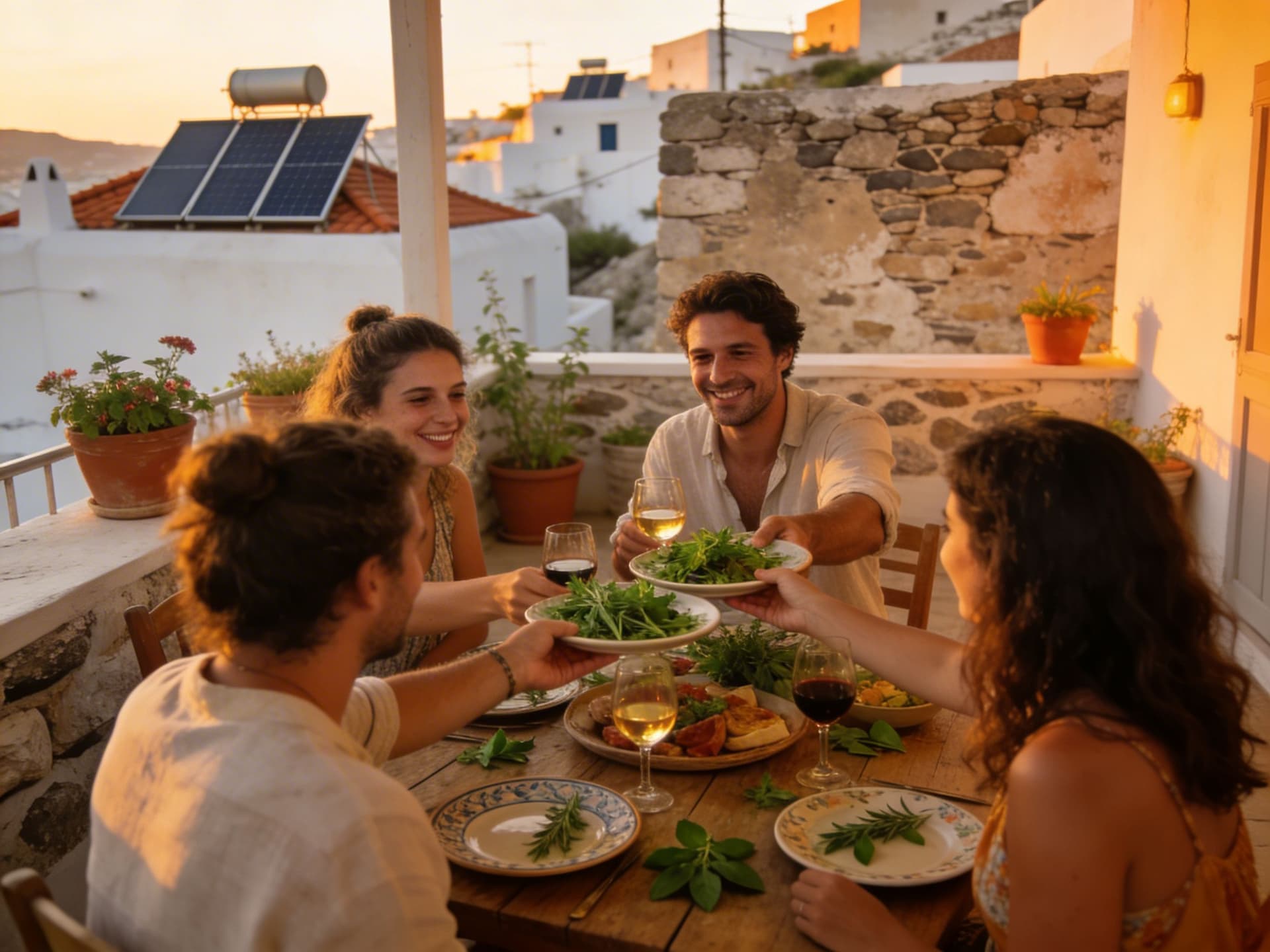
Lifestyle and green infrastructure are attractive, but the property path in Greece requires attention: residency rules changed in 2024, solar grid connections can be congested and local planning preserves traditional building lines. Connect the dream to local facts early so you can choose a home that fits both the life you want and the rules you’ll need to follow.
Property types and sustainable tradeoffs
Stone farmhouses deliver thermal mass and low-energy heating in winter but may require careful retrofit for insulation and wiring. New builds promise integrated photovoltaics and heat pumps, yet they sometimes lack the village grain that defines Greek life. Think: do you want an immediately liveable home surrounded by neighbours, or a retrofit project that becomes a regenerative retreat?
Working with local experts who know the green picture
A local agent who understands HEDNO grid limits, municipality conservation rules and which installers can secure net‑metering makes a tangible difference. They’ll also help identify properties where gardens, cisterns and passive shading are more than aesthetic — they’re functional systems that lower living costs and increase resilience.
- Steps that blend lifestyle and practical checks: 1) List the life moments you won’t compromise (market access, beach proximity, terrace sun). 2) Ask agents about existing solar, battery capacity and water storage. 3) Request connection statements from HEDNO and municipality conservation rules. 4) Factor retrofit time and local craftspeople availability into your timeline.
Insider Knowledge: What Expats Wish They’d Known
Expats often arrive enchanted, then learn that seasons and bureaucracy shape daily life. Summer brings festivals and a buoyant market; winter reveals whether a house’s insulation, heating and road access are truly year-round. Green energy in Greece is advancing fast — by 2023 renewables recorded historic highs — but local grid realities and seasonal demand matter when you calculate real independence.
Cultural integration, language and community
Say yes to the local café owner and the village panigyri. Learn a few phrases and attend a market: these are the doors that open. Communities appreciate buyers who invest in maintenance and landscape stewardship — a repaired dry‑stone wall or shared olive harvest binds you faster than any formal introduction.
Longer-term lifestyle and value signals
Look beyond view and sunsets: properties with proper water catchment, passive cooling, and roofs ready for panels hold value as Greece presses on with renewables. Areas investing in microgrids or community energy projects often offer lower long-term running costs and a solidarity-based lifestyle that matters to eco-minded buyers.
- Red flags to notice before you fall in love: • Missing connection statement to local grid • No records of past insulation or damp remediation • Unrealistic promises about immediate Golden Visa eligibility without current thresholds • Properties with disputed boundaries or unclear conservation restrictions
In short: buy the life you want, then verify the nuts-and-bolts. A terrace that fills with morning light and a market a five-minute walk away are worth as much as an optimized PV array — but both should be confirmed by local experts who read permits, not wishful listings.
When you’re ready, talk to an agency that pairs local knowledge of planning, green installers and community stewardship with a sense for the lifestyle you crave. Start with a short scouting trip in the season you intend to live in; taste the coffee times, check water access after rain and listen for the village rhythms — then make your move with confidence.
Conclusion: Greece offers a rare mix — immediate Mediterranean beauty and a green-energy transformation that makes sustainable living practical, not just aspirational. Find a place where the light, the food and the community align with systems for energy and water, and you’ll have a home that belongs both to you and to the landscape.
British expat who traded Manchester for Mallorca in 2017. Specializes in guiding UK buyers to luxury Spanish estates with clear navigation of visas and tax.