Off-Season Buying: Find Greener Value in France
Choose off-season visits and market towns to find better green value in France—seasonal timing, local experts and phased retrofits turn charm into sustainable, lasting homes.
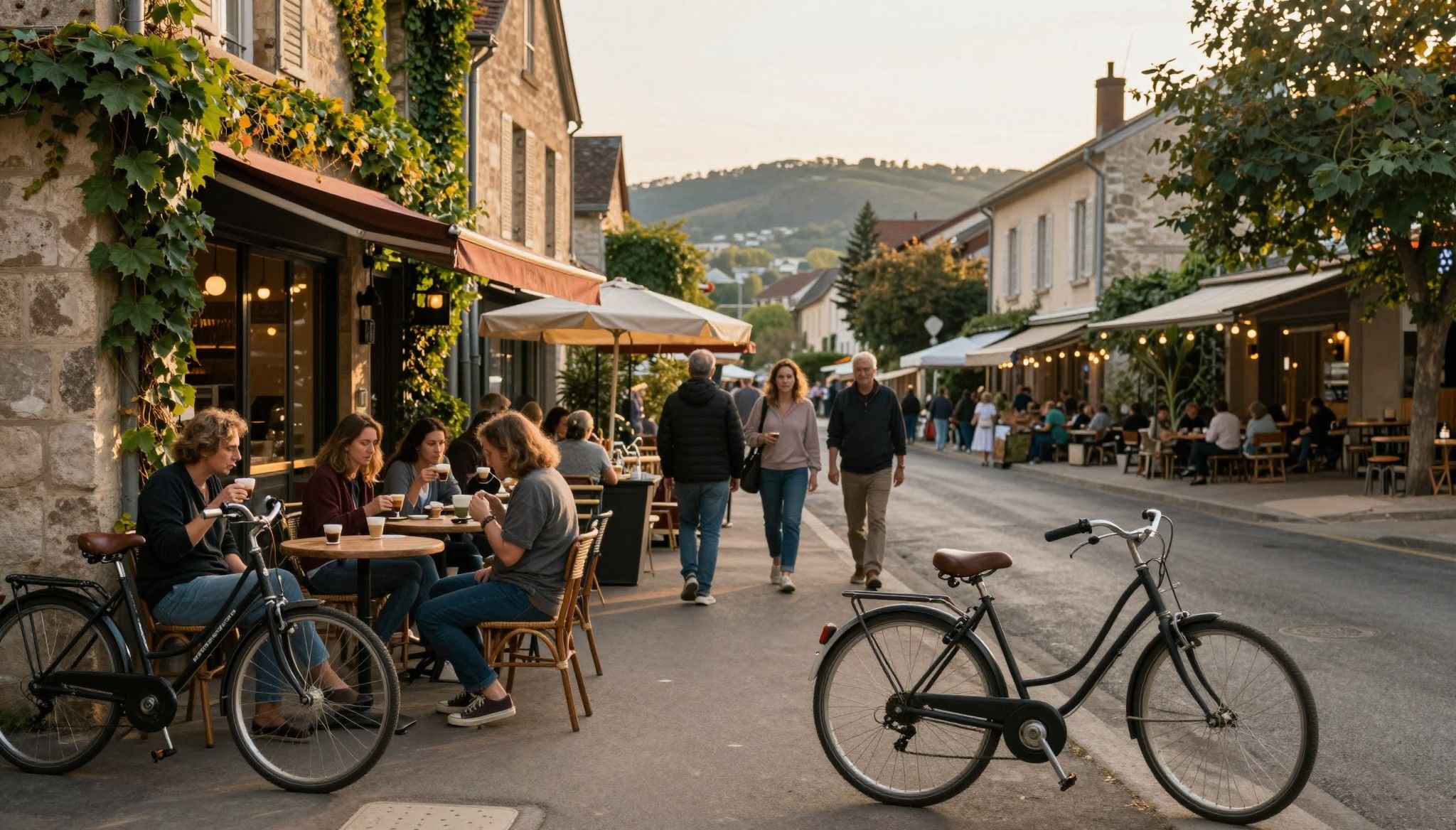
Imagine sipping a café au lait on a shaded terrace in a small market town just outside Aix, the air smelling of lavender and warm bread. The rhythm is slow, streets hum with weekly markets, and solar panels glint on tiled roofs where olive trees shade walled gardens. Many international buyers arrive enchanted by the Riviera or Paris, but the quiet places where community and nature meet often deliver the truest sustainable lifestyle. This guide flips the usual script: we start with the life you want, then show how off-season timing and green priorities find better value in surprising corners of France.
Living Frenchly: seasons, rhythms and real tastes of place
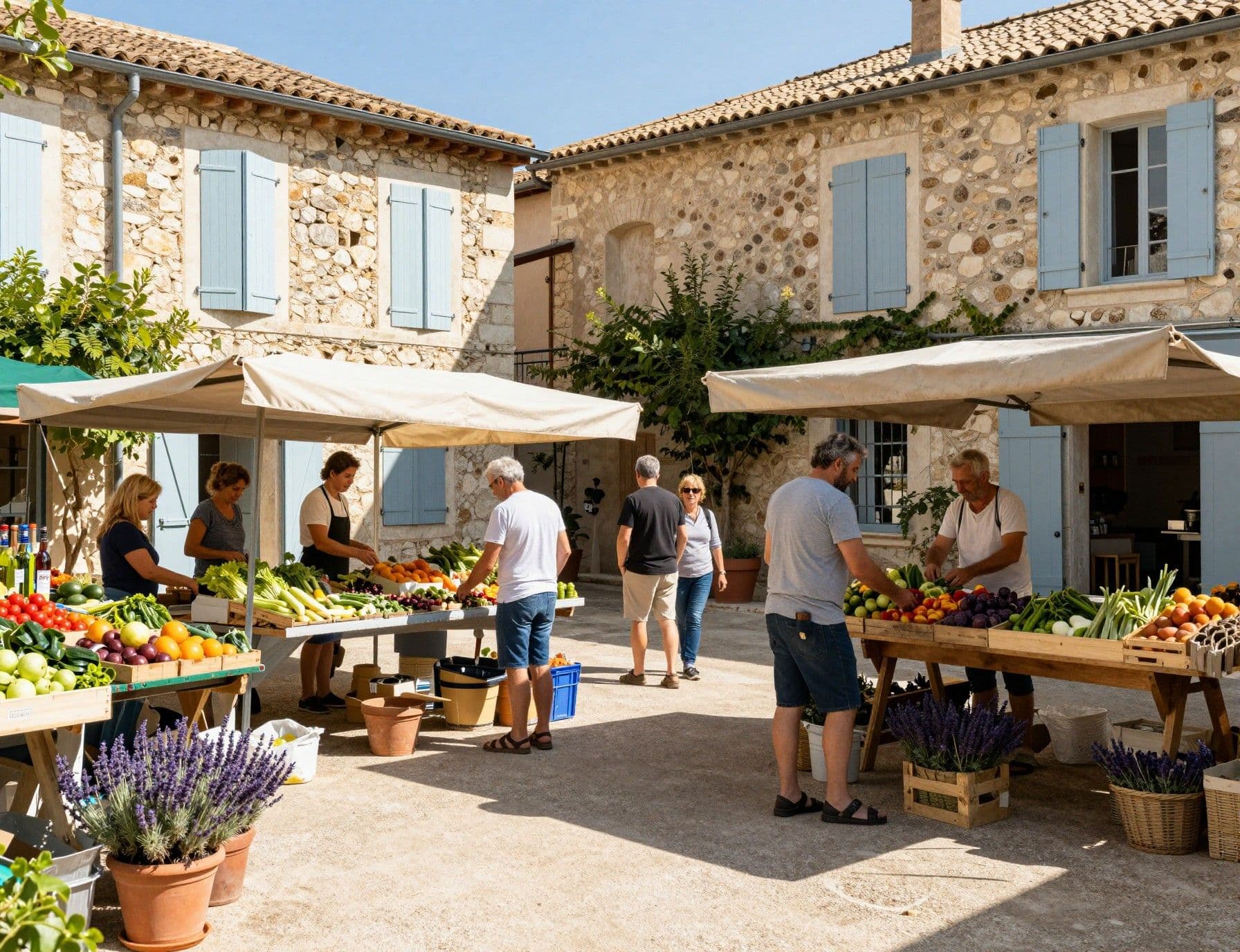
France is not a single texture but a tapestry: dawn markets in Lyon, salty wind and light along Le Grau-du-Roi, and the hush of pine-scented mornings in the Dordogne. Life here is seasonal—summer terraces, autumn mushroom forays, winter boulangeries busy with locals trading news between loaves. That rhythm shapes how neighborhoods feel and how properties perform; a home that glows in August may be quiet in November, yet its community life and biodiversity tell a different, richer story. For international buyers focused on sustainability, these seasonal cycles are advantages—gardens that support pollinators, passive heating through stone walls, and microclimates that favour edible gardens and solar gain.
Neighbourhood spotlight: a market town that feels like Provence
Pick a town like L'Isle-sur-la-Sorgue (Vaucluse) or a lesser-known cousin in nearby departments and you’ll find morning markets built into civic life: narrow streets, cafés where producers trade news, and homes with shutters that breathe with the light. These towns are not about headline views—they’re about living close to provenance: charcutiers who know your name, communal vegetable plots, and architects restoring stone farmhouses with lime plaster and timber. If you prize community gardens, local repair workshops and shared wood-stove initiatives, towns like this are fertile ground for sustainable living and for properties where small retrofits deliver big ecological returns.
Food, markets and small rituals that shape choices
The culinary calendar directs daily life: Saturday markets, midweek boulangeries, and local festivals that gather neighbours in squares. For a green buyer, proximity to markets matters: less packaging, more local produce, and a shorter food chain reduce both cost and carbon. Market towns also often sit within protected landscapes where renovation rules encourage traditional materials—think stone, lime mortar and reclaimed timber—materials that age well and lock in character. These are places where you can grow a productive garden, install modest solar arrays, and feel part of a food system that sustains place and people.
Lifestyle highlights to look for when you fall in love with a French town:
Weekly market with local producers (look for regional cheeses and small-scale butchers)
A communal garden or allotment project near the center for seasonal growing
Historic stone houses with potential for insulation upgrades and passive heating
Making the move: practical realities tied to lifestyle choices
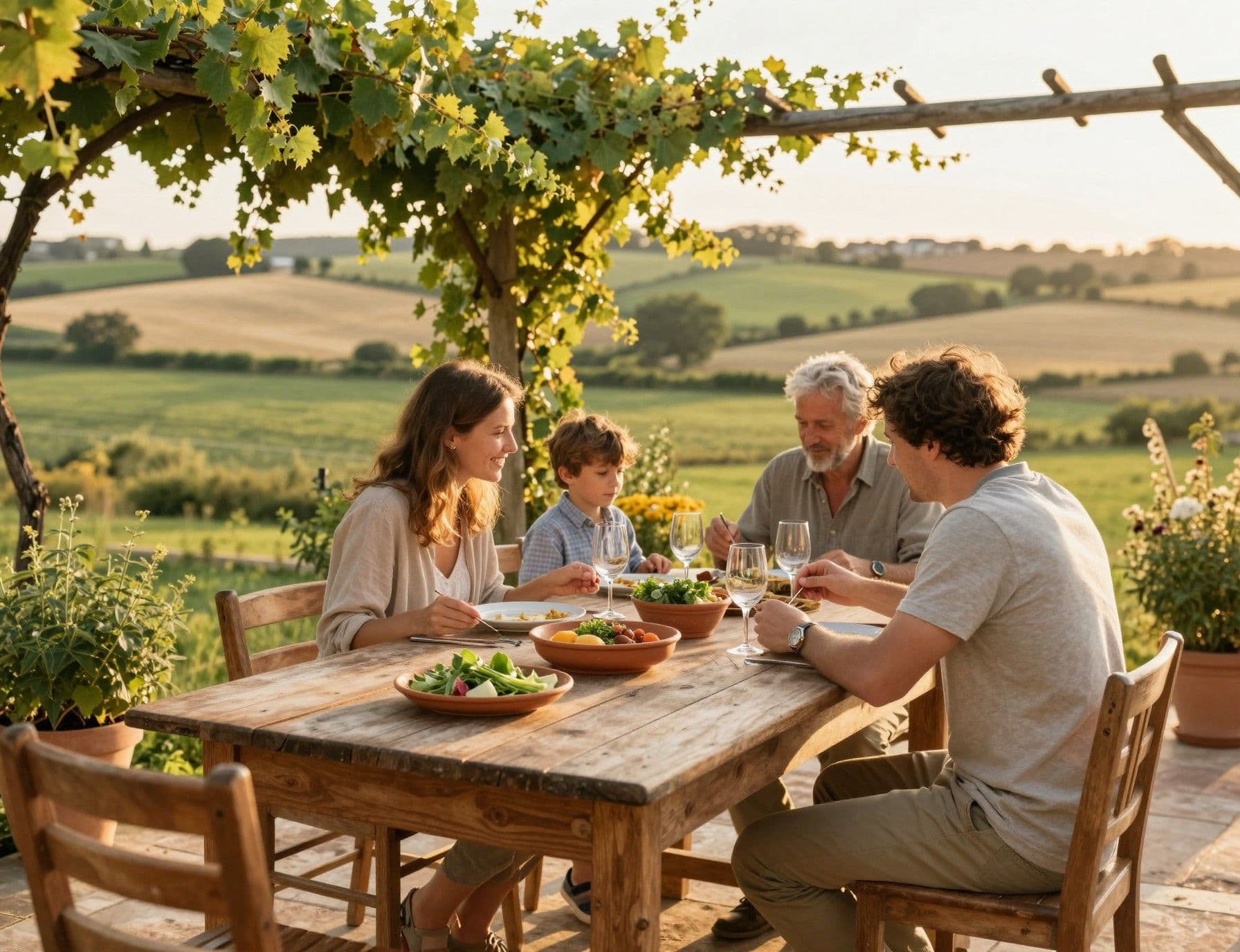
Dreams meet paperwork in the notary’s office, but the most important early decision is whether you buy for weekend escape, full-time life or a blended remote-work rhythm. Market data since 2024 shows regional shifts—urban prices stabilising while countryside demand grows—and that affects where green value appears. Knowing the finance context helps: mortgage availability and registration duties influence how much you can dedicate to retrofit budgets and renewable installations. Bring a lifestyle budget and a renovation budget: the latter is where environmental transformation happens and where long-term value is created.
Property styles that support sustainable living
Stone village houses with thick walls excel at passive thermal performance once draughts and cavities are addressed; timber-framed restorations offer rapid retrofit potential and lower embodied carbon; newer eco-builds around Bordeaux and Occitanie can include solar and rainwater systems from day one. Each type demands different trades and timelines: stone needs lime-based insulation and careful joinery; timber requires dry, breathable finishes and stringent pest/security checks; new builds may come with guarantees but can lack local character. Match the property type to how you want to live—if you dream of olive trees and an orchard, prioritise land and soil quality over a shiny terrace.
Working with local experts who understand place
Find an agent who knows small towns, a notaire fluent in cross-border purchases and a local architect experienced in traditional materials. Verify their green experience: ask for past eco-renovations, references, and whether they consult energy auditors (diagnostic de performance énergétique). Expect to pay for expertise—good local advice often saves time and prevents costly mistakes. Choose professionals who propose phased retrofit plans that respect heritage while improving energy performance and biodiversity.
Insider knowledge: what expats wish they’d known earlier
Expat buyers often tell the same story: we fell for light and charm, then learned about seasonal silence, heating bills, and the dance of local bureaucracy. The secret is deliberate timing and curiosity—buy in months when a town is lived in, not only during festival season. Off-season visits reveal real neighbours, municipal services, and whether the café is year-round or summer-only. Those quieter months also reveal retrofit opportunities when builders are less booked and prices for renovation can be gentler.
Practical steps to test the lifestyle before you buy
1) Rent for a season—stay in two different quarters to observe daily patterns. 2) Meet neighbours and attend a council meeting to understand community priorities. 3) Ask the agent for recent running costs and check local energy suppliers. 4) Commission an energy audit and a soils/trees survey before making an offer. 5) Build a phased retrofit plan and price it into your offer.
Longer view: how life and property evolve together
A French home bought for its sunlight and market access can evolve into a regenerative project over a decade: pollinator-rich meadows, improved insulation, modest PV, greywater recycling and a vegetable plot that feeds neighbours. As communities embrace waste reduction and local food economies, buyers who invest in stewardship often find both better quality of life and enduring value. Think of the purchase as joining a place, not owning a commodity—your stewardship matters as much as the initial price.
Conclusion: fall in love, then plan for life
France rewards those who move slowly. Begin in the market season to taste the life, return off-season to see its true contours, and let local experts translate lifestyle into realistic budgets. For eco-conscious buyers, off-peak timing often opens windows for better prices, available tradespeople and clearer retrofit pathways—so you can buy a home that feels right and treads lightly on the landscape. When you’re ready, Moss & Hearth can introduce agents versed in traditional materials, energy audits and community-minded stewardship to help you make the move with confidence.
Swedish advisor who left Stockholm for the Costa Brava in 2019. Specializes in sustainable, sea‑view homes for Scandinavian buyers and green finance insights.